

The House just voted to officially rename the Department of Defense to the Department of War in the passing NDAA, a move championed by Republicans to signal a harder edge on national security. This legislative shakeup comes bundled with a 5% to 7% pay raise for troops and a massive $750 million allocation to fortify security ties with Israel. Lawmakers also pushed through a $95 billion package targeting Iran war priorities, though the Senate has yet to act on these changes. Meanwhile, a Senate panel voted to hold Dr. Fauci in contempt of Congress after a GOP senator secured his private phone records. With the chamber in a short session window and general agenda congestion, the focus remains on these high-stakes battles rather than broad consensus.
Imagine a college football team that suddenly decides to rename itself "The War Zone" right before the big game. The fans are confused, the opposing coaches are terrified, and the players are wondering if they need to buy helmets or just swords. That is exactly what the House did to the Pentagon this week, swapping "Defense" for "War" in the annual budget bill. It is a bold play that signals a shift in the national mood, even if the Senate might just call a timeout on the idea.
Just like a team that trades a quarterback for a linebacker, this legislative move prioritizes a specific image over the usual playbook. The House Republicans are betting that a harder name will win the hearts of the electorate, even if the actual strategy remains the same. For defense contractors and small businesses, the message is clear: the tone has changed, and the playbooks are getting sharper.
The Legislative Scoreboard
Who changed the jersey and who got tackled?
| Side | Status | Result |
|---|---|---|
| Dept of Defense → War | House Passed | ▲ up |
| Troop Pay Raise (5-7%) | Included in NDAA | ▲ up |
| Israel Security Aid | $750M Allocated | ▲ up |
| Fauci Contempt Vote | Senate Panel | ▲ up |
| California AI Act | State Level Only | — |
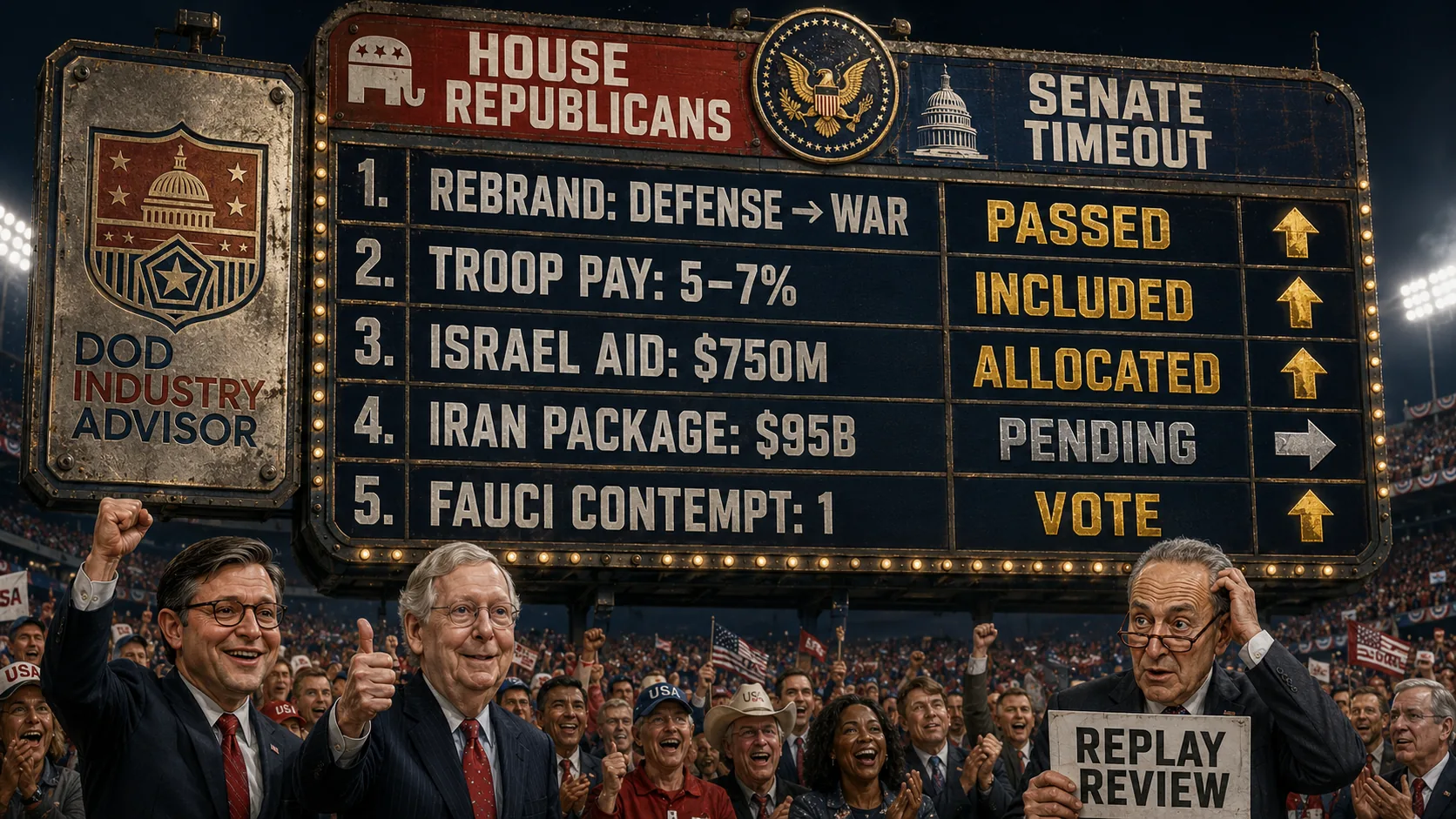
From “Defense” to “War”: The House Goes Off-Script
The House of Representatives has officially passed the annual National Defense Authorization Act, but not without a theatrical pivot that has defense contractors checking their mission statements. Lawmakers voted to strip the word “Defense” from the Department of Defense and replace it with the Department of War. This change, championed by House Republicans, was not a subtle administrative tweak; it was a deliberate signal of a harder edge on national security. The vote passed alongside a 5% to 7% pay raise for troops and a $750 million allocation specifically earmarked for security ties with Israel. While the House embraced this aggressive rebranding, the Senate has yet to act, leaving the “Department of War” in legislative limbo.
The House traded "Defense" for "War" like a team trading a quarterback for a linebacker, prioritizing image over the usual playbook.
The bill is a heavy hitter, bundling the renaming with a $95 billion package designed to fund Iran war priorities and other Trump-era directives. However, the legislative trail goes cold once it leaves the House floor. The provided sources do not confirm whether the Senate will adopt the renaming or the Iran funding package, nor do they indicate if the bill has reached the President’s desk for a signature by this August 9th window. While the House set the tone with a bold move, the final score of this legislative game depends entirely on the Senate’s next play.

$95 Billion for the Middle East: A House-Only Play
Behind the headline-grabbing name change lies a massive financial commitment to the Middle East theater. The House-passed defense policy bill includes a $95 billion package specifically targeting Iran war priorities. This allocation represents a significant shift in resource allocation, signaling that the chamber intends to fund a more active, perhaps confrontational, stance in the region. The package also includes a $750 million boost for Israeli security ties, cementing the alliance even as the department’s name changes to reflect a more aggressive posture.
Despite the House’s decisive vote, the legislative path remains obstructed. Sources indicate that the Senate has not yet voted on these specific provisions, and there is no confirmation that the “Department of War” renaming will survive the conference committee. The $95 billion Iran package and the $750 million Israel allocation are currently House-only provisions, meaning they face an uncertain future as the chamber navigates a short session window and general agenda congestion. Without Senate action, these funds and the new departmental title remain in a state of legislative flux.
Senate Panel Holds Dr. Fauci in Contempt
While the House argues over names and war funding, the Senate is locked in a high-stakes oversight battle with the former director of the National Institute of Allergy and Infectious Diseases. On August 6, 2026, a Senate panel voted to hold Dr. Fauci in contempt of Congress. The vote followed a contentious week where a GOP senator secured a copy of Dr. Fauci’s private phone records on August 5, 2026. This action marks a sharp escalation in the tension between the legislative branch and the executive agency, shifting the focus from policy debate to personal accountability and data privacy.
Review your current defense contracts for clauses related to "Department of War" branding. If your company is a vendor to the Pentagon, prepare a briefing note on how this potential name change might affect your marketing materials and government relations strategy, even if the Senate stalls the bill.
Hemp Regulation: A Rare Bipartisan Win
In a sea of partisan battles, a bipartisan bill has emerged to regulate hemp THC products. The new legislation aims to maintain the legality of these products while imposing new taxes and stricter regulations. This is the only confirmed U.S. legislative development for the August 9 window that bridges the partisan divide. Unlike the contentious NDAA renaming or the Iran package, the hemp bill represents a functional update to an existing market, addressing tax collection and safety standards without the drama of a departmental name change.
However, the bill’s status remains in the proposal phase. Sources do not specify a committee vote or floor status for the hemp legislation as of August 9, leaving the industry waiting to see if the bipartisan momentum will translate into a signed law. For small businesses and veteran-owned firms in the hemp space, this bill offers a potential path forward, but the lack of a confirmed vote means the regulatory landscape remains in flux.

What This Means for You
• Prepare for a Name Change, Just in Case. Even if the Senate rejects the “Department of War” title, the House’s move signals a political shift; update your government relations strategy to align with a more aggressive national security narrative.
• Watch the $95 Billion Iran Package. If the Senate eventually adopts the House’s Iran funding, expect a surge in defense contracts related to Middle East security operations; monitor your pipeline for opportunities in that sector.
• Track the Hemp Tax Regulations. The bipartisan hemp bill introduces new tax rules; small businesses in this space should consult a tax expert to understand the potential impact on their bottom line once the bill moves forward.
• Monitor the Fauci Contempt Vote. The Senate’s move to hold Dr. Fauci in contempt highlights a broader trend of increased oversight and data scrutiny; ensure your firm’s compliance protocols are robust enough to withstand heightened congressional scrutiny.
The Reader’s Box
Does renaming the Department of Defense to the Department of War signal a necessary shift in national security strategy, or is it a risky political stunt that could alienate allies? Let us know your take.
Source presentation is carried in the article body where applicable. Reported facts and analytic judgment are kept distinct.