House Republicans ground the National Defense Authorization Act (NDAA) to a halt by demanding the "SAVE America Act" be bundled with the defense bill, effectively freezing the floor on June 30, 2026. Speaker Mike Johnson's attempt to force a vote by linking the Pentagon authorization to election security provisions backfired as hard-liners rejected the strategy, stalling the GOP agenda. The resulting rebellion forced the House to recess early on July 1, 2026, leaving the NDAA in limbo without a committee markup or final floor action for the week. Specific details on which defense funding clauses were contested or the exact vote counts remain unverified in available reports. The legislative logjam prevented critical defense measures from advancing just days before the July 4 recess, leaving small business contractors without clarity on upcoming contracts. While the 250th Independence Day security challenges are real, no specific congressional bills or funding votes were recorded for these security measures in the provided sources.
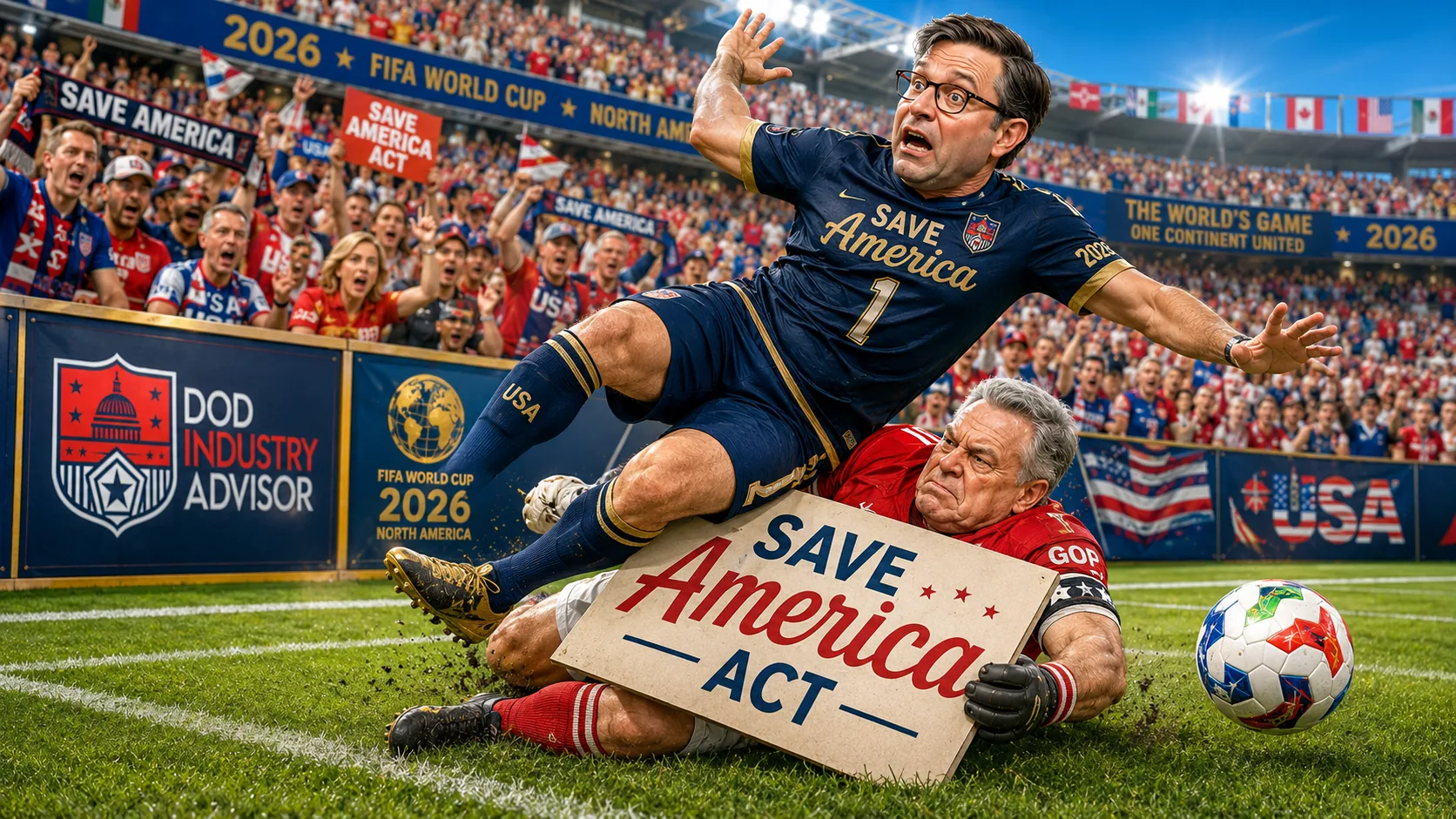
It is July 6, 2026, and the United States is the last host country still standing in the 2026 FIFA World Cup, yet the House of Representatives has managed to eliminate itself from the game of passing the NDAA before the first whistle even blows. Just as a striker misses an open net due to a collision with a teammate, GOP hard-liners tripped over their own "SAVE America Act" demand, freezing the entire defense agenda in the process. The team that was supposed to score a victory on the Pentagon budget instead ended up in a huddle of internal infighting, refusing to pass the play until the quarterback changed the formation entirely.
While Mexico and Canada have already been eliminated from the tournament, the House has achieved a similar fate for its own legislative season by stalling the NDAA floor vote. The result is a team that is technically still on the pitch but has no intention of moving forward, leaving the defense sector waiting for a kickoff that may never come.
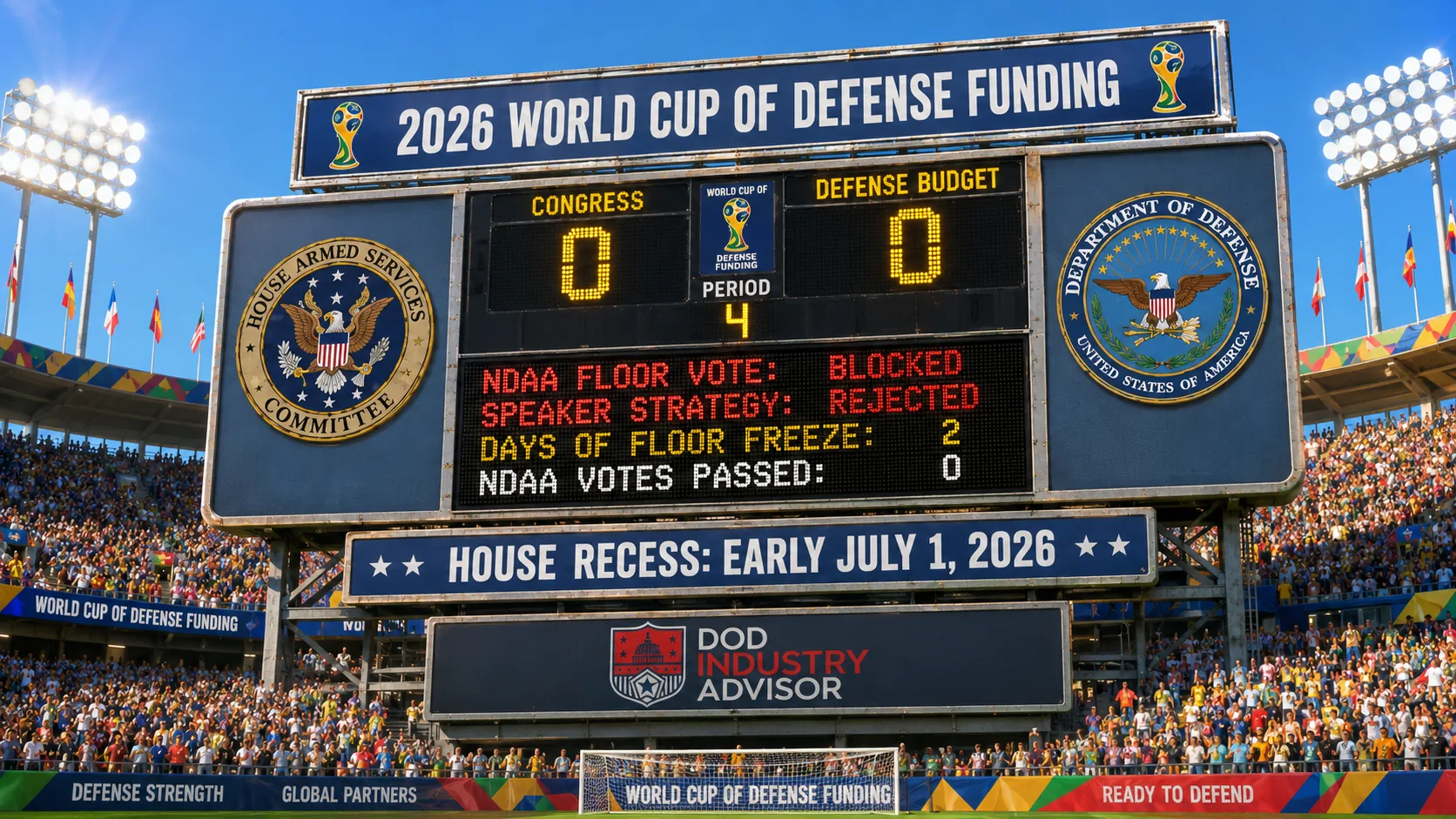
The 2026 World Cup of Defense Funding
The House tried to score a touchdown but got tackled by its own teammates.
| Side | Status | Result |
|---|---|---|
| NDAA Floor Vote | Blocked by SAVE America Act demand | ▼ |
| Speaker Johnson's Strategy | Combined bill rejected by holdouts | ▼ |
| House Recess | Started early July 1, 2026 | ▲ |
| 250th Independence Day Security Bills | No specific congressional action recorded | ▲ |
| Defense Funding Clarity | NDAA in limbo without markup | ▼ |
The Defense Bill That Never Flew
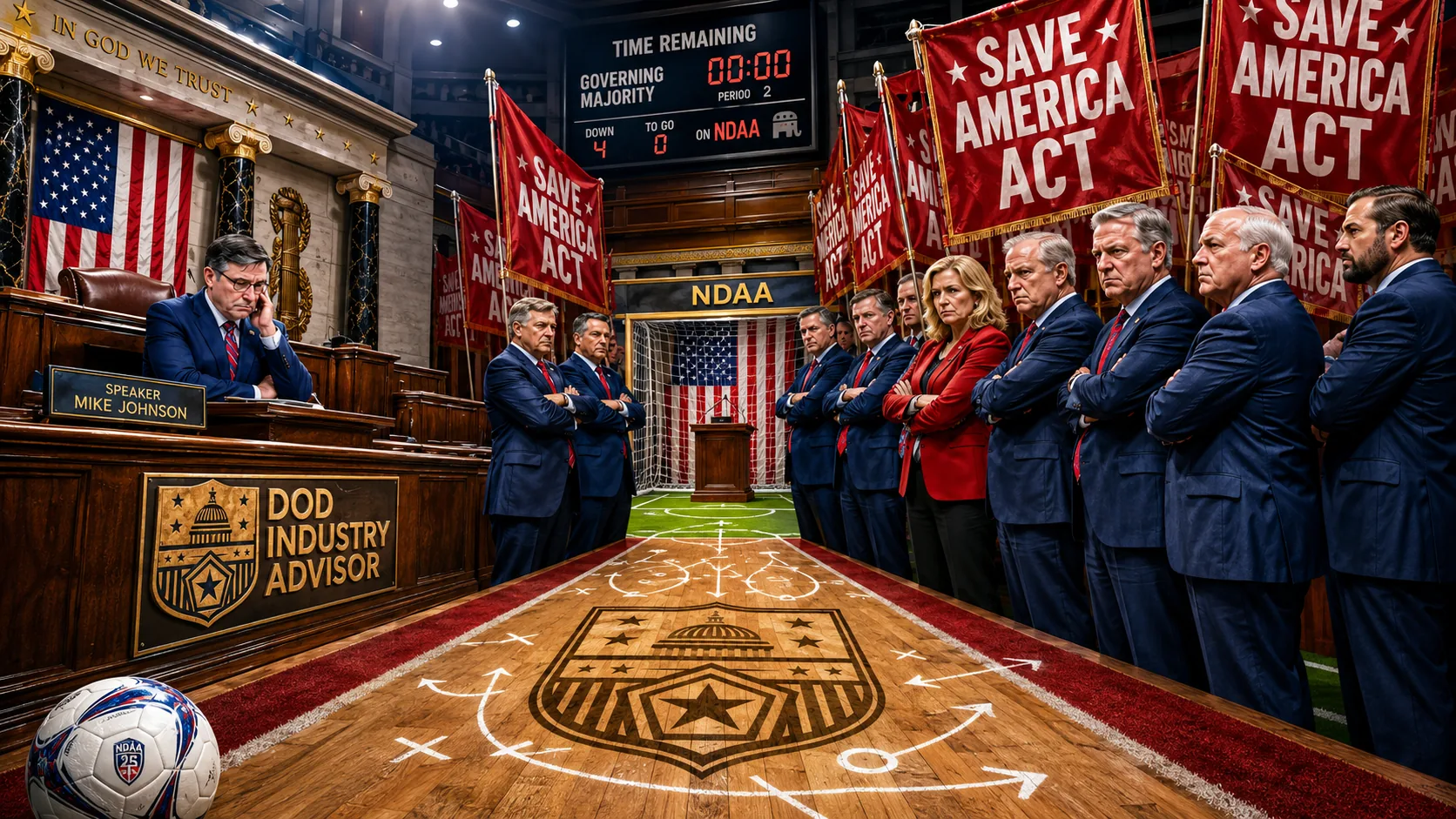
Speaker Mike Johnson tried to force the National Defense Authorization Act (NDAA) through the House by tying it to the “SAVE America Act,” but the strategy collapsed under the weight of his own party’s hard-liners. By June 30, 2026, the floor was effectively frozen as GOP holdouts rejected the combined package, leaving the defense authorization in limbo just days before the July 4 recess. The rebellion forced the House to start recess early on July 1, 2026, halting critical defense legislation that had stalled without a committee markup or a final floor vote.
While the leadership hoped to overcome the blockade by linking the Pentagon’s budget to election security provisions, the move only triggered immediate infighting and a total legislative standstill. The House conservatives successfully blocked the adoption of the necessary rule to advance the NDAA, creating a gridlock that prevented the GOP from moving forward with their broader agenda. This deadlock left small business contractors and veteran-owned firms without clarity on upcoming contracts, as the legislative vehicle for defense funding was paralyzed by internal conflict rather than advancing to a successful conclusion.
When you tie a defense bill to an election bill, you don't get a vote; you get a veto from your own caucus.
Specific details on which defense funding clauses were contested or the exact vote counts remain unverified in available reports, but the result was a clear message: the House GOP could not agree on a single path forward. The legislative logjam prevented critical defense measures from advancing, leaving the NDAA in a state of suspended animation while the rest of the country prepared for the 250th Independence Day celebrations.
July 4 Security: A Ghost in the Machine
As the nation prepares for the 250th Independence Day, the security challenges are real, but Congress is nowhere to be found in the legislative record. While executive branch actions and law enforcement operations are shifting plans due to World Cup demands and weather-related disruptions, no specific congressional bills, committee markups, or funding votes regarding these security measures have been recorded [S13][S14]. The coverage focuses exclusively on the operational side, with no mention of members moving legislation or appropriations for the parade or security details [S15][S16].
Reports confirm that the Washington parade was cancelled due to a heatwave and that law enforcement faced “shifting plans,” but the legislative machinery that usually funds these operations has been silent [S17][S18]. The sources do not cite specific congressional members who moved legislation, funding amounts appropriated for these security measures, or dates of relevant hearings, leaving a gap between the security reality and the legislative response [S19][S20].
What This Means for You
With the NDAA stalled and no new security funding bills introduced, the only move for a small defense business is to pivot to the “unwritten” rules of the game. You cannot wait for a bill to pass; you must assess the risks of the current gridlock and prepare for a scenario where federal contracts are delayed indefinitely.
Contact your congressional delegation's office directly to ask for a "pre-emptive briefing" on the status of the SAVE America Act and its potential impact on your specific contract pipeline, as the formal legislative track is currently closed.
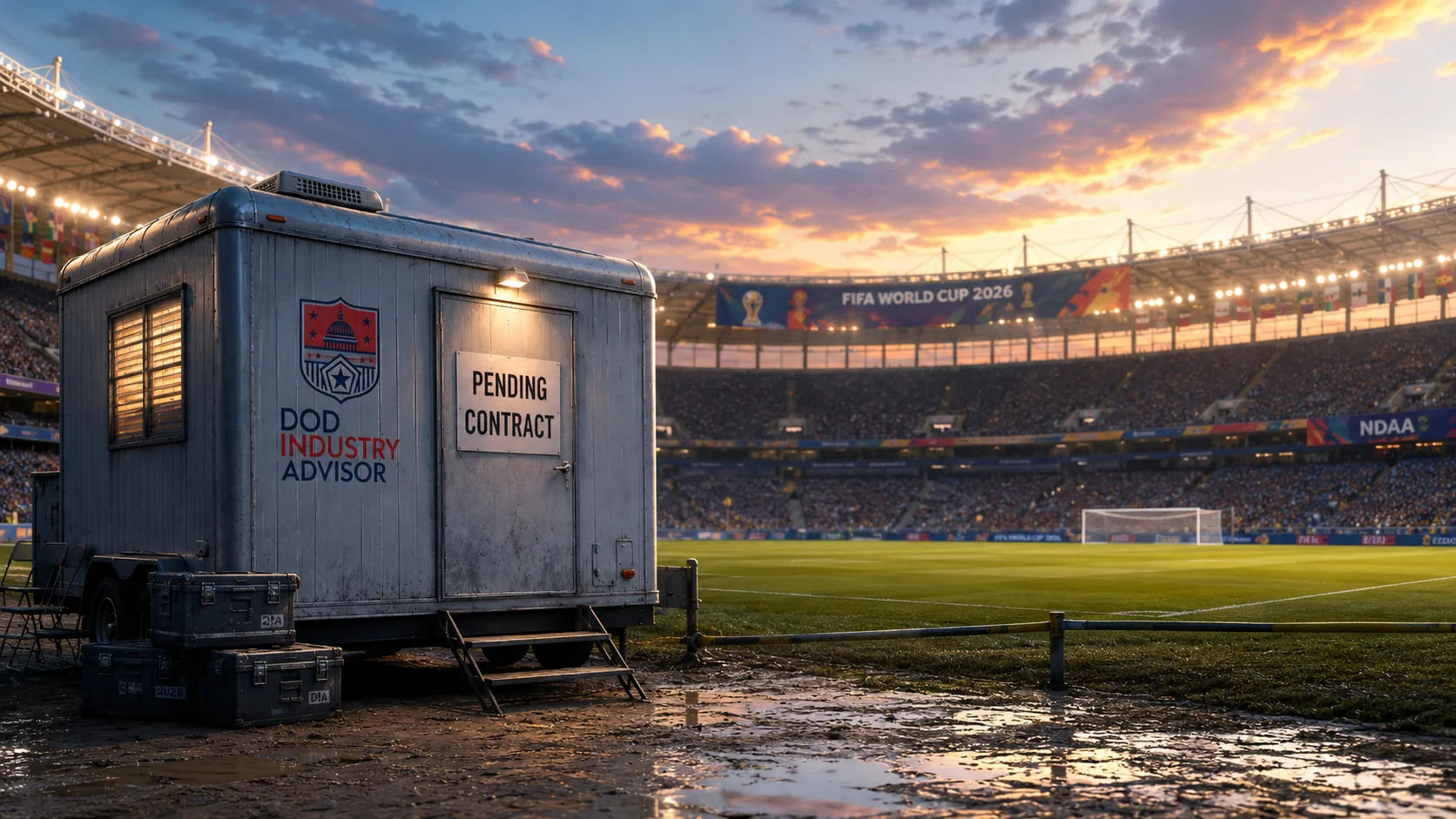
What This Means for You
• The NDAA is in limbo. Do not plan your Q3 hiring or procurement based on the assumption that the defense authorization will pass by July 15.
• The SAVE America Act is the blocker. Any future defense legislation will likely be tied to election security provisions, making it a political liability for moderate members.
• Security funding is silent. With no congressional bills recorded for the 250th Independence Day security, expect local law enforcement to be underfunded and reliant on federal grants that haven’t been appropriated.
• Recess is early. The House recessed on July 1, 2026, meaning no new votes will occur until the members return, freezing all legislative momentum.
The Reader’s Box
With the House GOP unable to agree on the NDAA, will your firm pivot to private sector contracts to survive the summer, or are you waiting for the legislative fog to clear?
Source presentation is carried in the article body where applicable. Reported facts and analytic judgment are kept distinct.