

The House passed a GOP budget blueprint injecting $95 billion for the Iran war and farm aid while the Senate shot down a War Powers resolution in a tight 47-49 vote. Defense Secretary Pete Hegseth testified before the Appropriations Committee that hostilities have already burned through $37.5 billion, prompting a fresh supplemental request for June 24. A new White House executive order mandates a domestic supply chain map, threatening contract terminations for firms clinging to unreliable foreign vendors. Simultaneously, USTR slapped a 25 percent Section 301 tariff on Brazilian goods, forcing small contractors to restructure bid math overnight. With the House and Senate locked in a funding standoff and the Senate rejecting war powers checks, the legislative landscape is defined by urgent spending and sudden compliance hurdles.
LeBron James just signed a two-year, $8 million deal with the Sixers to chase a ring, trading cash for glory. It is the ultimate "take less now to win big later" move. But if you are a small defense contractor, the Congress this week played the opposite game: they raised the price of everything and cut your safety net. While LeBron sacrificed millions for a shot at the title, your supply chain just got taxed, your contracts got threatened, and the war costs kept climbing.
LeBron is betting on the ring; you are betting on a budget that might not exist. The White House just ordered a supply chain audit that could kill your task orders if you don't switch vendors immediately. The tariff on Brazilian goods means your input costs are about to jump 25 percent. You cannot trade your profit margin for a championship this week.
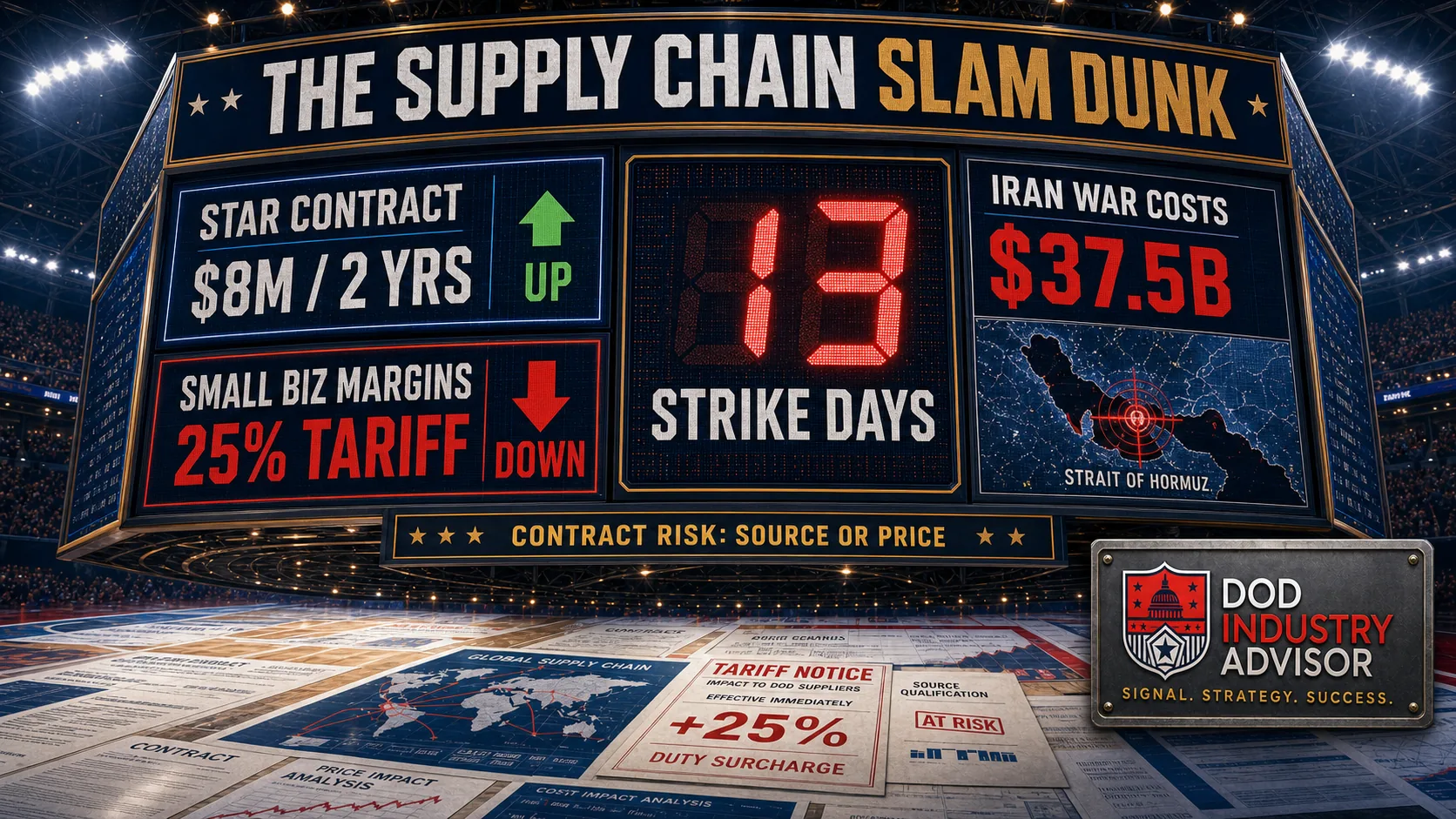
The Supply Chain Slam Dunk
Who is cutting costs and who is getting cut?
| Side | Status | Result |
|---|---|---|
| LeBron's Contract | $8M for 2 years | ▲ up |
| Small Biz Margins | Tariffs + Supply Chain | ▼ down |
| Iran War Costs | $37.5B Spent | ▲ up |
| Foreign Vendors | Executive Order Ban | ▼ down |
The Executive Order That Turns “Made in USA” Into a Trap
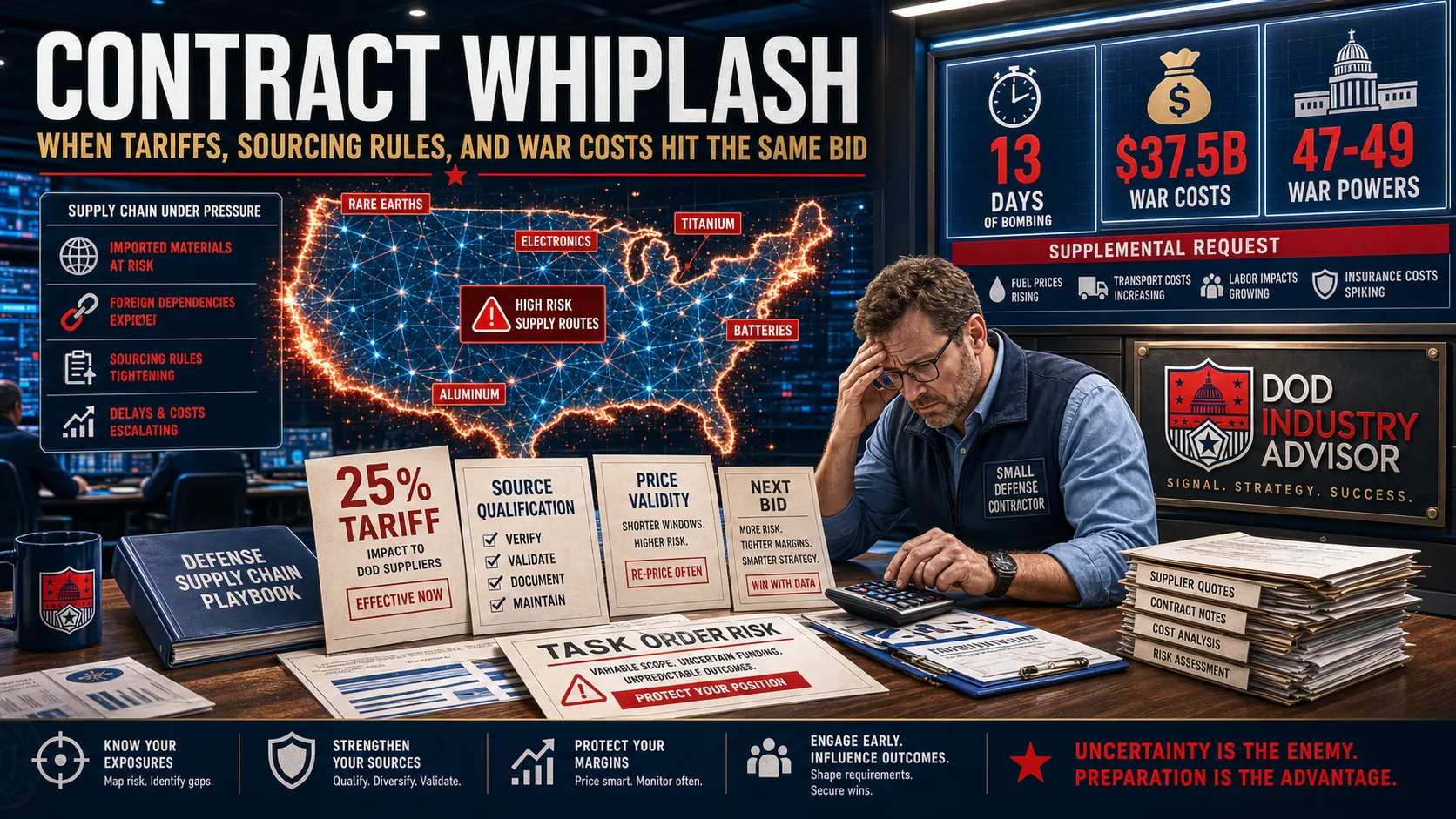
Defense Secretary Pete Hegseth told the Senate Appropriations Committee that the Iran war has already burned through $37.5 billion, but the real financial hit might come from a new White House executive order issued July 20. That order directs the Department of War to map every critical supply chain and threatens to terminate task orders if contractors cannot qualify alternative domestic sources for unreliable foreign vendors. Small businesses clinging to Brazilian components just saw a 25 percent Section 301 tariff slapped on by USTR on July 15, a move that forces immediate bid math restructuring or contract loss. The White House order explicitly warns that failure to qualify alternative sources could lead to declining options or suspensions, turning a standard supply chain check into a existential threat for firms that haven’t diversified.
While the New York Fed reported in early July that 80 percent of firms passed higher imported-input costs to customers, small defense contractors cannot simply pass costs when a contract is already signed. The practical implication is stark: you must document every country-of-origin and lower-tier supplier immediately, or risk being the one absorbing the cost while the government walks away. The order creates a paradox where complying with domestic sourcing mandates might cost more than the tariff itself, yet the penalty for non-compliance is termination.
Your supply chain is now a liability the government is ready to cut if it doesn't bleed "Made in USA" ink.
This isn’t just about logistics; it is a forced pivot that demands small firms refresh their quotes with new price-validity windows to survive the volatility. The administration is betting that the pain of transition will force a rapid consolidation of suppliers, leaving only those agile enough to map their own supply chains before the Department of War does it for them.
The $37.5 Billion Hole and the $95 Billion Fix
After 13 consecutive days of bombing in the Iran theater targeting military operations centers and drone storage facilities, the conflict has paused for a second day, but the legislative damage is done. Defense Secretary Hegseth testified that the war has cost $37.5 billion, prompting the administration to seek a fresh supplemental request for June 24. In response, the House passed a GOP budget blueprint injecting up to $95 billion to cover the war, farm aid, and parts of the SAVE America Act. However, the Senate rejected a War Powers resolution in a tight 47-49 vote, leaving the funding mechanism in a precarious limbo.
While the House moves forward with massive funding, the Senate’s rejection of the War Powers check means the President’s war powers remain unchecked, a dynamic that could lead to further escalation without congressional oversight. The tension between the House’s aggressive funding and the Senate’s refusal to check the war powers creates a chaotic environment for defense contractors. Firms bidding on emergency buys or recompetes must now navigate a landscape where the money is there, but the legal authority to spend it is constantly under fire.
The House wrote the check; the Senate refused to sign the receipt.
This legislative whiplash affects everything from fuel and freight to air defense and ISR demand, as uncertainty delays awards and changes requirements. Small firms must watch recompetes closely, knowing that every headline about a bombing pause or a funding vote could instantly shift the rules of engagement for their contracts. The $95 billion is a lifeline, but it is a lifeline tied to a legislative knot that might not be untied until the next session.
The Brazil Tariff and the Small Business Squeeze
USTR announced on July 15 a 25 percent Section 301 tariff on certain Brazilian goods after a yearlong investigation, a move that hits small defense businesses where it hurts most. The New York Fed reported that about 60 percent of firms absorbed some costs in 2025, a figure that will rise as the new tariffs hit. For small contractors, this means the math of a bid is no longer static; it is a moving target that requires constant adjustment to avoid eating the new tariff costs silently.
The tariff movement combined with the domestic-source pressure from the White House order creates a perfect storm for firms relying on foreign components. Small businesses must now document country-of-origin and lower-tier suppliers with surgical precision to avoid being caught off guard by the Department of War’s new mapping requirements. The cost of compliance is high, but the cost of non-compliance is a terminated contract.
Review your active contracts for any Brazilian or foreign components, calculate the 25 percent tariff impact, and draft a price-adjustment clause for your next bid to protect your margins.

What This Means for You
• Refresh your bid math. Add price-validity windows to all new quotes to account for the 25 percent Brazil tariff and potential supply chain disruptions.
• Map your suppliers. Document every lower-tier supplier and country-of-origin for all active contracts to prepare for the Department of War’s new mapping mandates.
• Watch the recompetes. Monitor emergency buys and task-order shifts in the defense sector, as the $95 billion budget and war funding may trigger rapid contract changes.
• Prepare for termination. If you rely on unreliable foreign vendors, immediately begin qualifying alternative domestic sources to avoid contract suspension or termination.
The Reader’s Box
Have you already adjusted your bid pricing to include the new 25 percent Brazil tariff, or are you still absorbing the cost in your margins?
Source presentation is carried in the article body where applicable. Reported facts and analytic judgment are kept distinct.