
A peace deal with an asterisk: the Iran vote, the VA cancellation, and the $20M secret.

House Republicans finally killed the VA overhaul bill after members realized they couldn't sell a 1.5 million veteran cost-shift to their own constituents. While the House pushed the 2027 NDAA to the full floor, the Senate is stuck debating a historic spending hike that might never pass without Mitch McConnell's return. The Space Force just scored a massive $55.5 billion win from the Appropriations Committee, but the real drama is the Senate's failed war powers resolution trying to stop the Iran war. With McConnell gone and the House voting on a divisive Israel measure, the Hill is a chaotic mess where billions move in the dark while veterans wait for answers.
Watching Congress this week felt like trying to watch a football game where the players keep switching teams mid-play. The House voted to stop the VA bill, the Senate voted to stop the Iran war, and the Space Force just got a new jersey while the rest of the military tries to pay for its old one. It's like the NFL Draft where you spend all year building a roster, only to have the Commissioner cancel the game because the referee is arguing with the coach.
For defense contractors, this isn't just noise; it's a signal that your bid just got moved to overtime while the referee is in the locker room. The $55.5 billion for Space Force is the only touchdown, but the rest of the league is stuck in a "no-call" zone where the war powers resolution might get vetoed and the NDAA might never see the light of day.
The Hill’s Final Whistle
Who scored, who got penalized, and who is on the bench?
| Side | Status | Result |
|---|---|---|
| VA Overhaul Bill | House kills vote | ▼ down |
| 2027 NDAA | House advances to floor | ▲ up |
| Iran War Powers | Senate passes, House stalled | — flat |
| Space Force Budget | HAC approves $55.5B | ▲ up |
| Mitch McConnell | Absent from chamber | ▼ down |
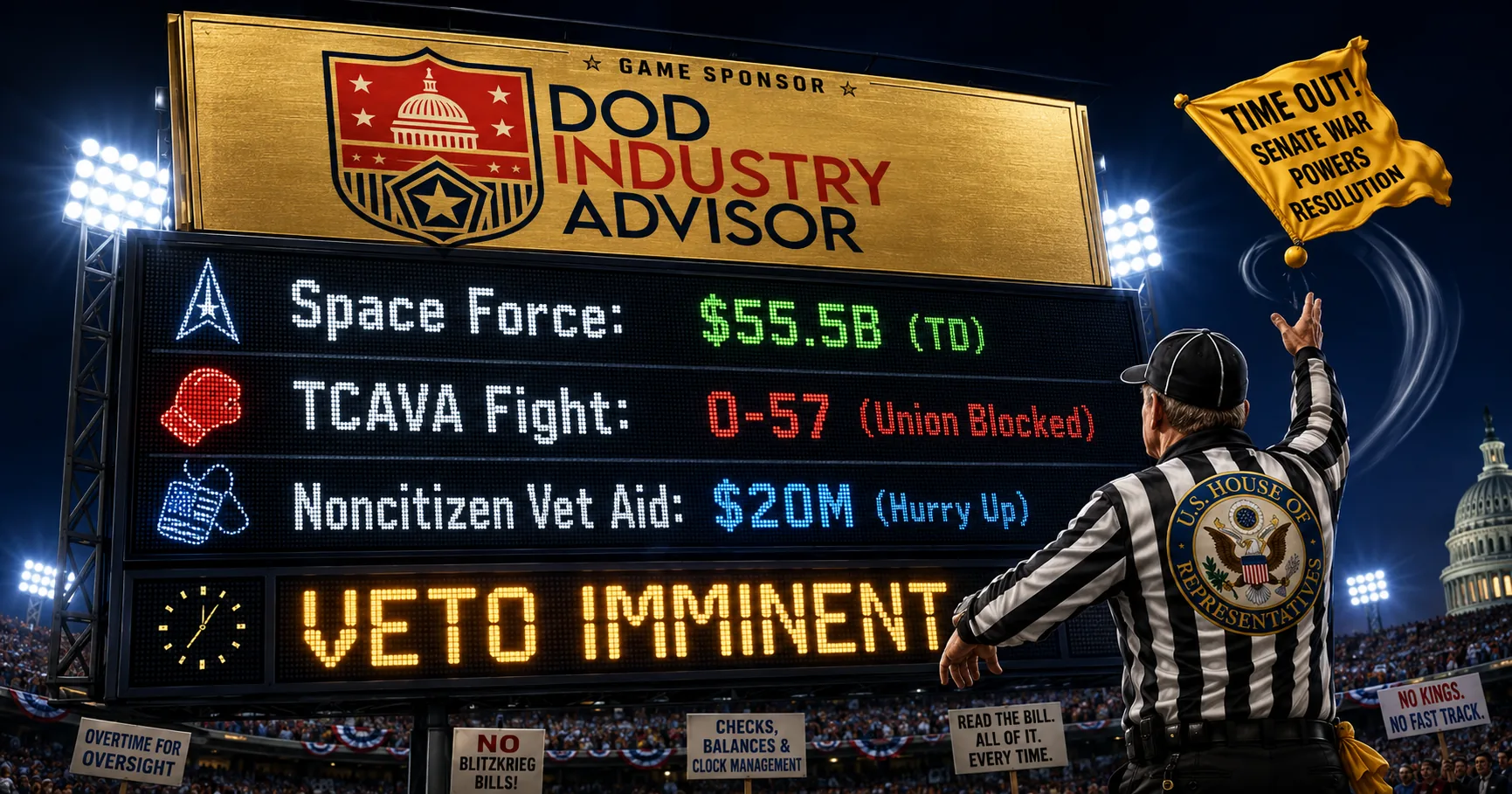
The VA Vote That Vanished
The House canceled a scheduled vote on a major VA overhaul bill this week, leaving a room full of defense contractors and veteran advocates holding their breath. The momentum that had built over months suddenly halted after mounting opposition, proving that even the most well-oiled legislative machines can seize up. Meanwhile, a different storm is brewing: sixty veterans bills totaling $57 billion are under scrutiny. Fifteen military groups are sounding the alarm that the proposed “TCAVA” framework would shift costs from the Pentagon to the backs of 1.5 million future veterans. It is a classic case of fiscal gamesmanship where the bill passes the committee but dies on the floor, or worse, gets amended into a financial trap.
When the House cancels a vote, the only thing that gets approved is the silence in the room.
The situation is further complicated by the lack of confirmed actions on the $4.8 billion VA facilities overhaul. While the Senate passed a landmark housing bill impacting veterans, the specific congressional votes, markups, or committee actions regarding this massive infrastructure investment remain unverified in the current window. For small defense businesses specializing in VA construction or facility management, the uncertainty is the real enemy. You cannot bid on a project that Congress hasn’t formally marked up, and you certainly cannot invoice for a bill that was canceled before it even reached the floor.
Space Force Gets the Gold Standard
While the VA bill stalled, the House Appropriations Committee swung into action with a $55.5 billion funding package specifically for the U.S. Space Force. This is not a vague “study” or a “recommendation”; it is a concrete approval of hard cash for orbital dominance. In a week where other chambers were debating or absent, the House Appropriators delivered a clear signal: the Space Force is no longer the future; it is the now. This approval marks a significant legislative action that bypasses the usual gridlock, likely because the funding is so specific and the strategic necessity so clear that opposition evaporated.
NDAA: The $20M Legal Grant and The Senate Debate
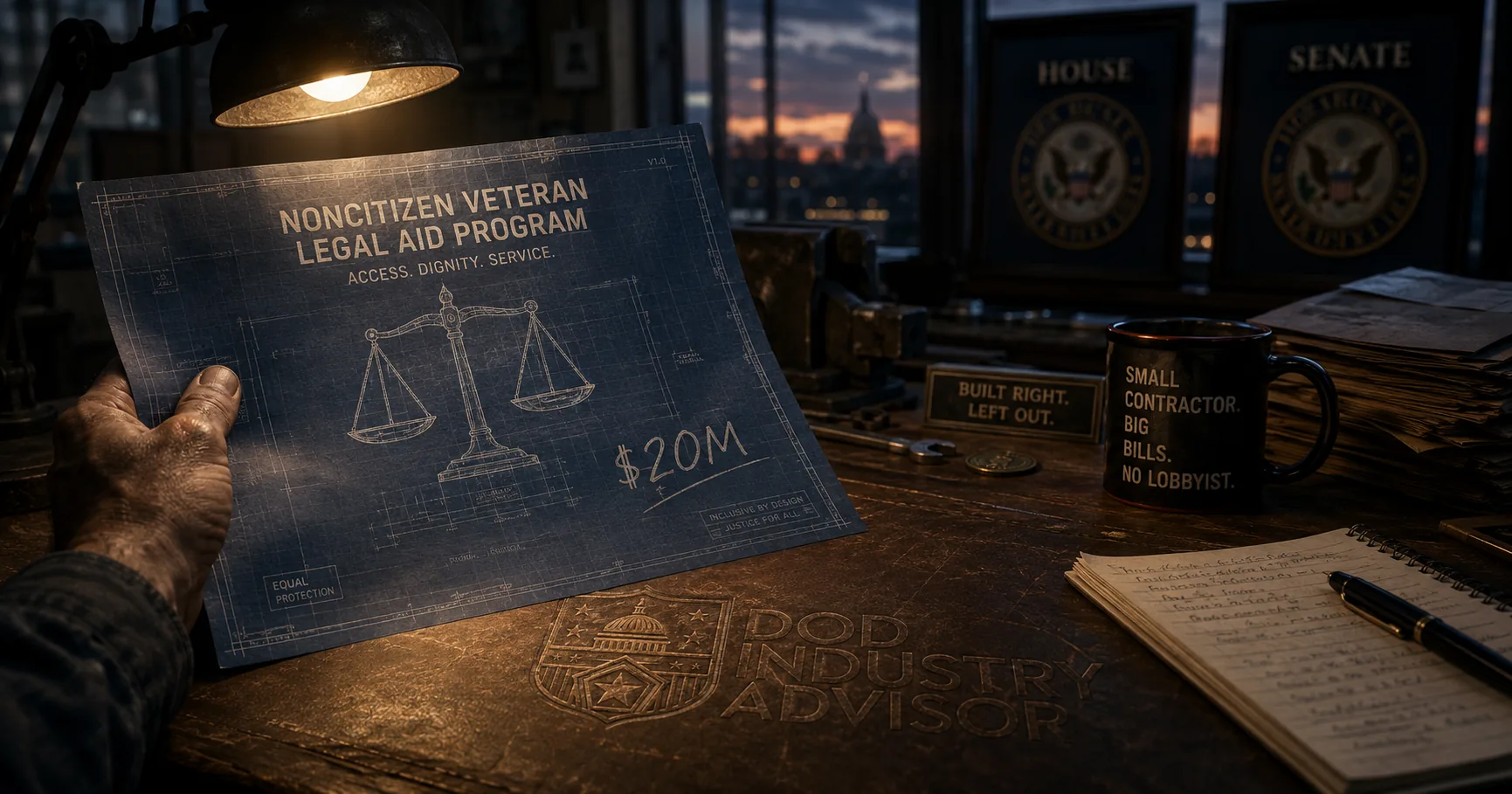
The House has advanced its 2027 defense spending bill to the full chamber for a vote, a key step in the annual National Defense Authorization Act cycle. But the real story in the NDAA isn’t just the massive numbers; it is the $20 million provision for VA grants specifically designated for legal services for noncitizen veterans. This is a targeted policy win that often gets lost in the noise of fighter jet budgets. Simultaneously, Senate debate has commenced regarding a historic increase in defense spending, though specific vote counts or committee markup details remain unconfirmed. The House is moving fast; the Senate is debating the scale. For a small defense firm, the legal services grant is a niche opportunity, while the broader NDAA debate signals a massive influx of capital coming down the pipe.
War Powers, Veto Threats, and the Iran Ceasefire
On June 23, the U.S. Senate passed a war powers resolution to halt the conflict with Iran, delivering a bipartisan rebuke of President Trump’s military actions. However, this measure faces a potential presidential veto and requires House concurrence to become law, turning a legislative victory into a constitutional standoff. Following the Senate vote, both chambers formally rebuked the administration’s war strategy, signaling significant legislative friction over executive authority. Yet, as of June 28, there is no confirmed congressional action regarding specific NDAA amendments or appropriations tied to the “ceasefire” or the subsequent Iranian attacks on Bahrain and Kuwait. The focus remains on the stalled war powers resolution, leaving the funding and oversight for the new escalation in limbo. The war is on, but the money is stuck in a voting loop.
What This Means for You
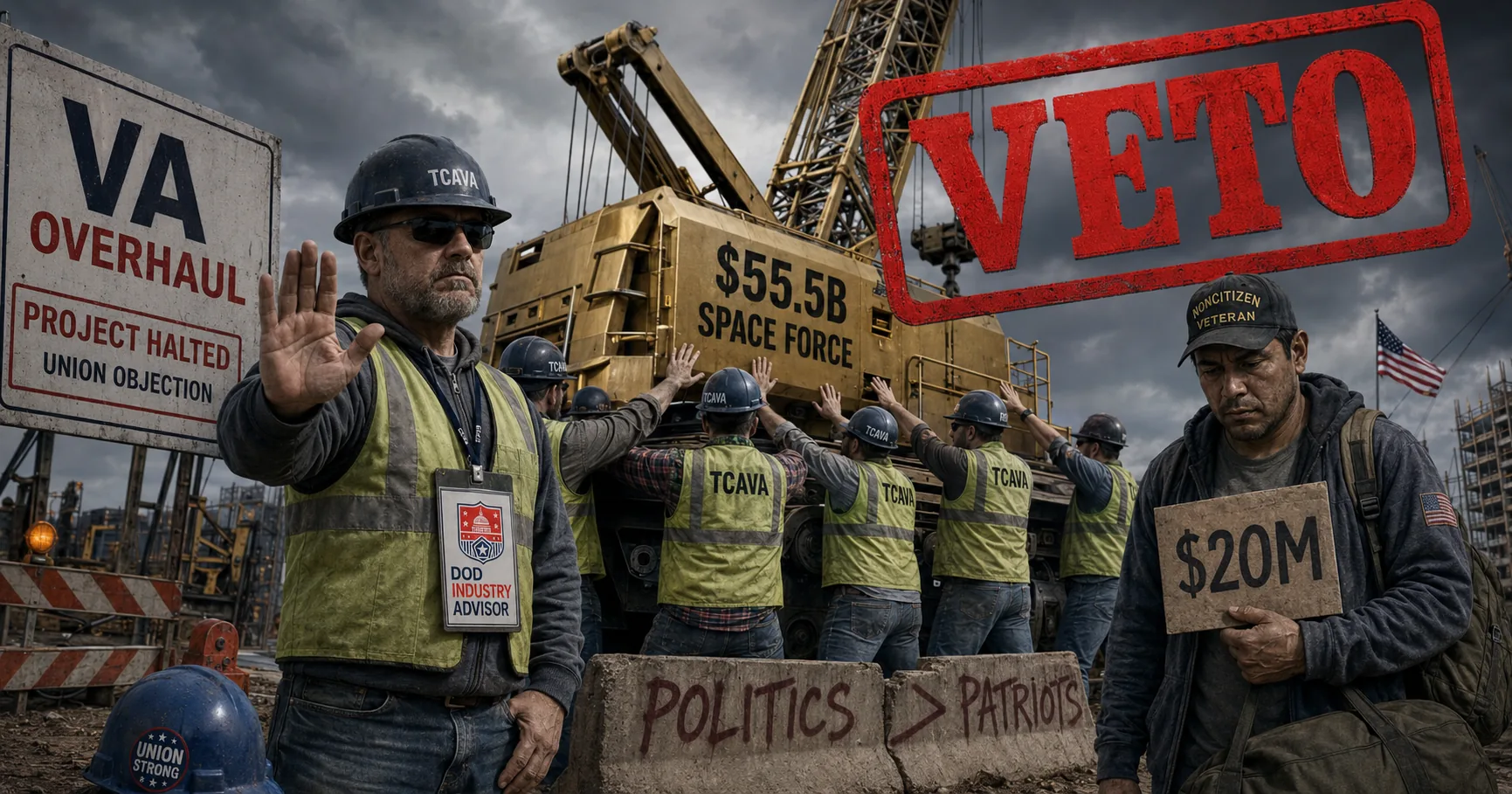
• Pause your VA facility bids. With the $4.8 billion overhaul lacking confirmed committee markups and the House canceling the major overhaul vote, no new contracts are imminent for VA construction projects this week.
• Pitch the Space Force immediately. The $55.5 billion House Appropriations approval is a hard fact; your proposal for space tech or logistics should reference this specific committee action to show you are in the know.
• Leverage the legal services grant. The $20 million NDAA provision for noncitizen veteran legal services is a unique, funded niche; partner with legal tech firms or compliance specialists to capture this specific stream.
• Avoid the Iran funding trap. With the war powers resolution stalled and no confirmed appropriations for the new Iran escalation, do not bid on defense contracts tied to “Iran contingency” funding until the House and Senate reconcile the veto threat.
The Reader’s Box
With the VA overhaul vote canceled and the Space Force funding approved, which specific vendor category (construction, IT, or logistics) do you think is most vulnerable to the "TCAVA" cost-shifting debate?
Source presentation is carried in the article body where applicable. Reported facts and analytic judgment are kept distinct.