
Both chambers are gone until November 9 — five weeks of pro forma. The continuing resolution still runs to December 11, Sections 102 and 104 still bar new starts, and the first vote back is a permitting bill wearing a tax bill’s number.
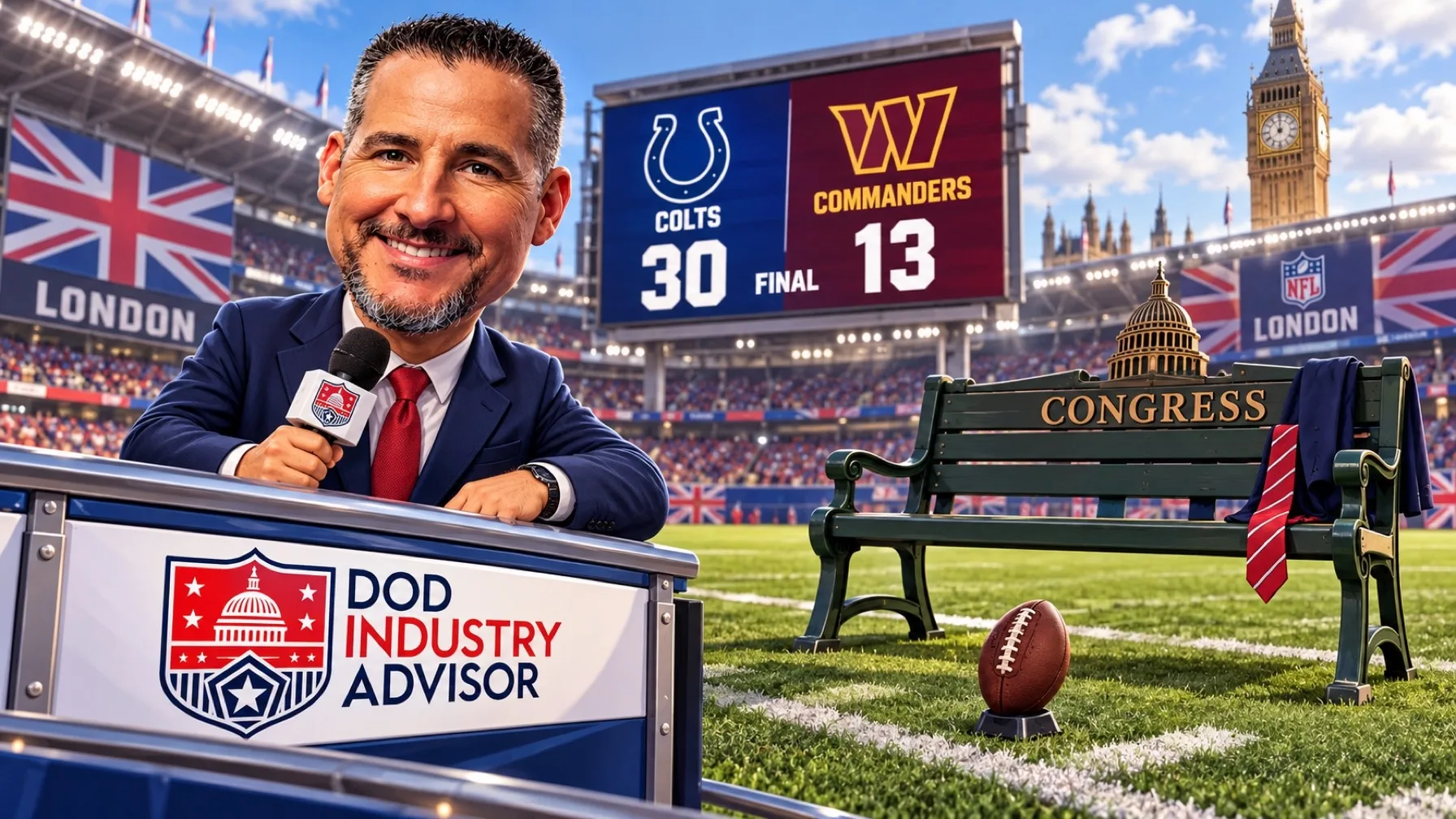
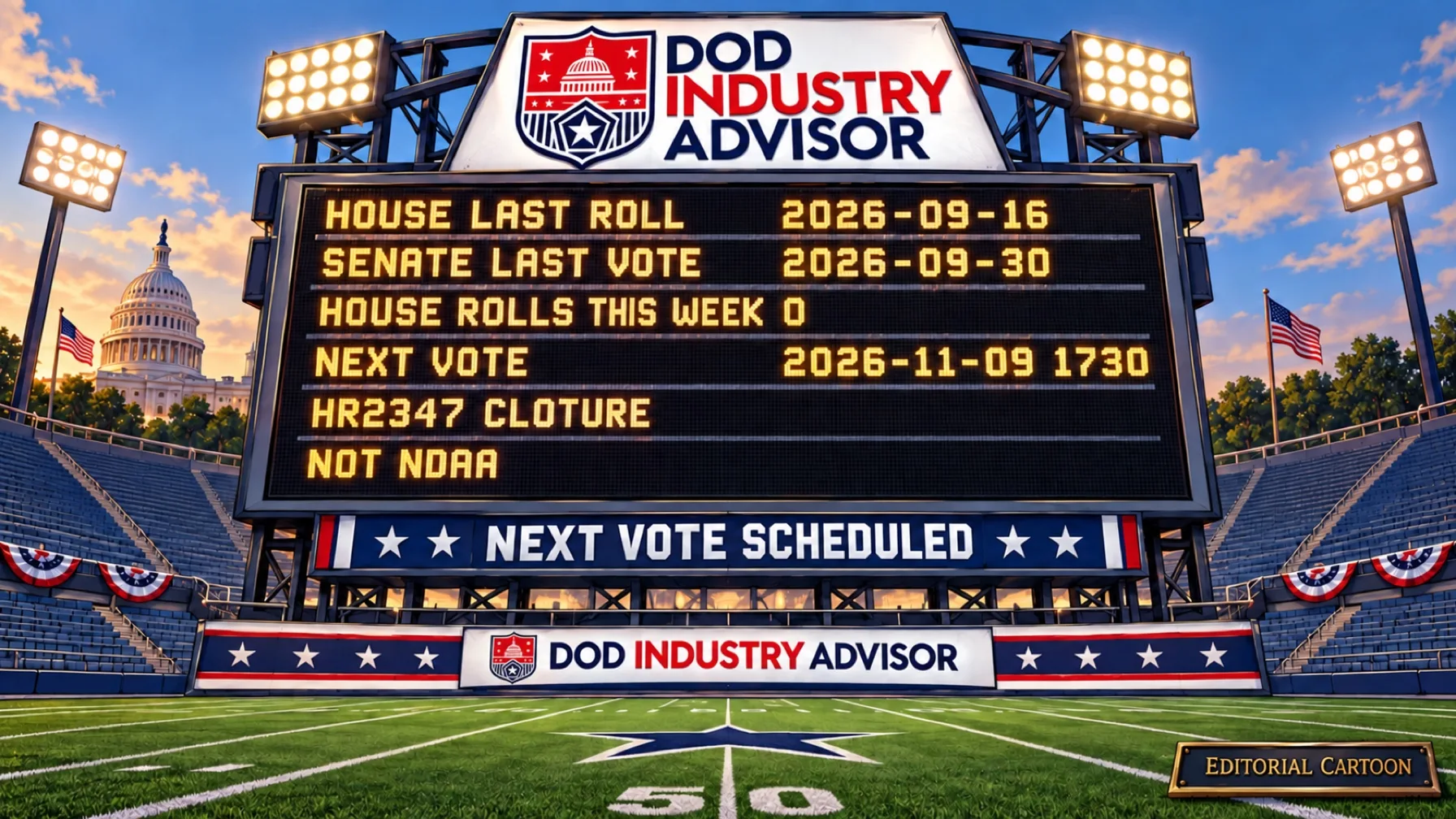
Washington crossed an ocean to play a football game and lost its quarterback in the first quarter. The other Washington did not dress. The House cast its last recorded votes on September 16. The Senate cast its last on September 30, two days before its own schedule said it would finish. Neither chamber votes again until November 9.
That is five weeks of pro forma sessions — the lights on, the gavel down, no business conducted. The Senate has announced eleven of them between October 5 and November 5. The House meets Monday at 4:30 p.m. for the same reason.
Nothing underneath changed. The government runs on P.L. 119-103 at FY26 rates through December 11, and Sections 102 and 104 still bar new starts on that money. The FY27 defense authorization is still a House-passed bill with no Senate-passed counterpart and no conference.
A bye week is only useful to a team that uses it. Congress is not going to use this one, and the only hard deadline in front of you for the next five weeks has nothing to do with Congress.
At Tottenham Hotspur Stadium on Sunday, the Commanders led 6–0 and then stopped having a quarterback. Laiatu Latu came down on Marcus Mariota in the pocket, Mariota left with a right knee injury, and Washington — already without Jayden Daniels — finished the afternoon with Athan Kaliakmanis, the seventh-round rookie it had taken 223rd overall in April. The Colts won 30–13.
It is a particular kind of bad week: you travel, you start well, and the thing that decides the game is not the game plan. You do not get to call a bye after the fact.
Congress called one in advance. The House left on September 16 and has opened and closed the chamber eleven times since without taking a vote. The Senate stayed two weeks longer, spent its last day on two failed cloture votes and a Labor Secretary confirmation, and then went home on September 30 — two days before the schedule this newsletter printed last Sunday said it would.
That is the second week running that a published congressional schedule overstated what actually happened. Last week the lesson was to read the record instead of the calendar. This week the record says the same thing the calendar did, only sooner and more completely: nobody is coming back before the election.
Sources: Washington Post · Commanders · Senate roll call votes · House Clerk
Congressional Calendar — Both Benches Are Empty
For the first time this fall the two chambers are on the same clock, and the clock is stopped. The House has held pro forma sessions only since September 16, when it passed the Retire through Ownership Act, S. 2403, 401–14 on Roll Call 314. Its next votes are expected Monday, November 9.
The Senate worked longer and stopped more abruptly. It passed S. 4668 on student-athlete protections 77–22 on September 28, rejected a motion to proceed to a health-care resolution and a discharge motion on September 29, and on September 30 failed cloture twice — 53–47 on H.R. 7008 and 57–43 on H.R. 9340 — before confirming Keith Sonderling as Secretary of Labor 47–41. That confirmation, vote 256, is the last roll call of the session.
Then the Senate published the quietest document of the week: a schedule of eleven pro forma sessions running October 5, 6 and 9; October 13, 15, 19, 22, 26 and 29; and November 2 and 5 — then adjournment until 3:00 p.m. on Monday, November 9. A pro forma session is a chamber opened and closed, usually inside a minute, by one member. It exists to satisfy the constitutional bar on either chamber adjourning more than three days without the other’s consent, and to block recess appointments. It is not a session in any sense you can sell into.
The number for your capture board has not changed since last week, and it is still zero. What changed is that it is now zero in both chambers, and the next date on it is November 9.
| Sun | Mon | Tue | Wed | Thu | Fri | Sat |
|---|---|---|---|---|---|---|
| Sep 27 | 28Senate · S.4668 passes | 29Senate | 30Senate · last votes | Oct 1pro forma | 2 | 3 |
| 4today | 5pro forma · both | 6pro forma | 7 | 8 | 9pro forma | 10 |
| 11 | 12 | 13pro forma · DIU closes | 14 | 15pro forma | 16 | 17 |
| 18 | 19pro forma | 20 | 21 | 22pro forma | 23 | 24 |
| 25 | 26pro forma | 27 | 28 | 29pro forma | 30 | 31 |
| Nov 1 | 2pro forma | 3Election Day | 4 | 5pro forma | 6work period ends | 7 |
| 8 | 9Both sched. · 5:30 cloture vote | 10Both sched. | 11Both sched. | 12Both sched. | 13Both sched. | 14 |
Dark = both chambers in session. Outlined = one chamber only. Blank = out; “pro forma” = opened and closed with no business. Past days from the House Clerk and Senate roll call records; November days are schedule, not record.
The Standings — What Belongs on the Board
The middle column is what the record shows. The last column is the next thing you can actually observe.
| Item | What the record establishes | What to watch next |
|---|---|---|
| House | Last recorded votes September 16 (Roll Call 314). Pro forma only since. Next votes expected November 9. | The first roll call after the election |
| Senate | Last roll call September 30 (vote 256). Adjourned two days ahead of its own schedule. Eleven pro formas announced October 5 – November 5; convenes 3:00 p.m. November 9. | Whether the November 9 vote happens on time |
| First vote back | Approximately 5:30 p.m. November 9: cloture on the motion to proceed to Calendar #453, H.R. 2347 — the shell for the bipartisan permitting package released September 30. | Whether 60 votes exist for text written before the election |
| P.L. 119-103 | FY26 rates through December 11. Sections 102 and 104 unchanged: no new production, no rate increases, no new P-1 or R-1 lines, no new starts. | Full-year bills or a second continuing resolution in the lame duck |
| FY27 NDAA | H.R. 8800 passed the House 216–212 on July 22. Senate cloture on S. 4784 failed 50–46 on July 14. No conference, no conferees named. | A lame-duck conference between November 9 and December 11 |
| DIU CLASS ACT | Both calls close October 13. DIU states it will coordinate industrial security support through the facility-clearance process. | Whether you clear the eligibility floor before you write a word |
| Week 4, London | Colts 30, Commanders 13. Mariota out in the first quarter with a right knee injury; a seventh-round rookie finished. | Washington’s depth chart, which is now the whole story |
The Next Snap Is a Permitting Bill in a Tax Bill’s Jersey
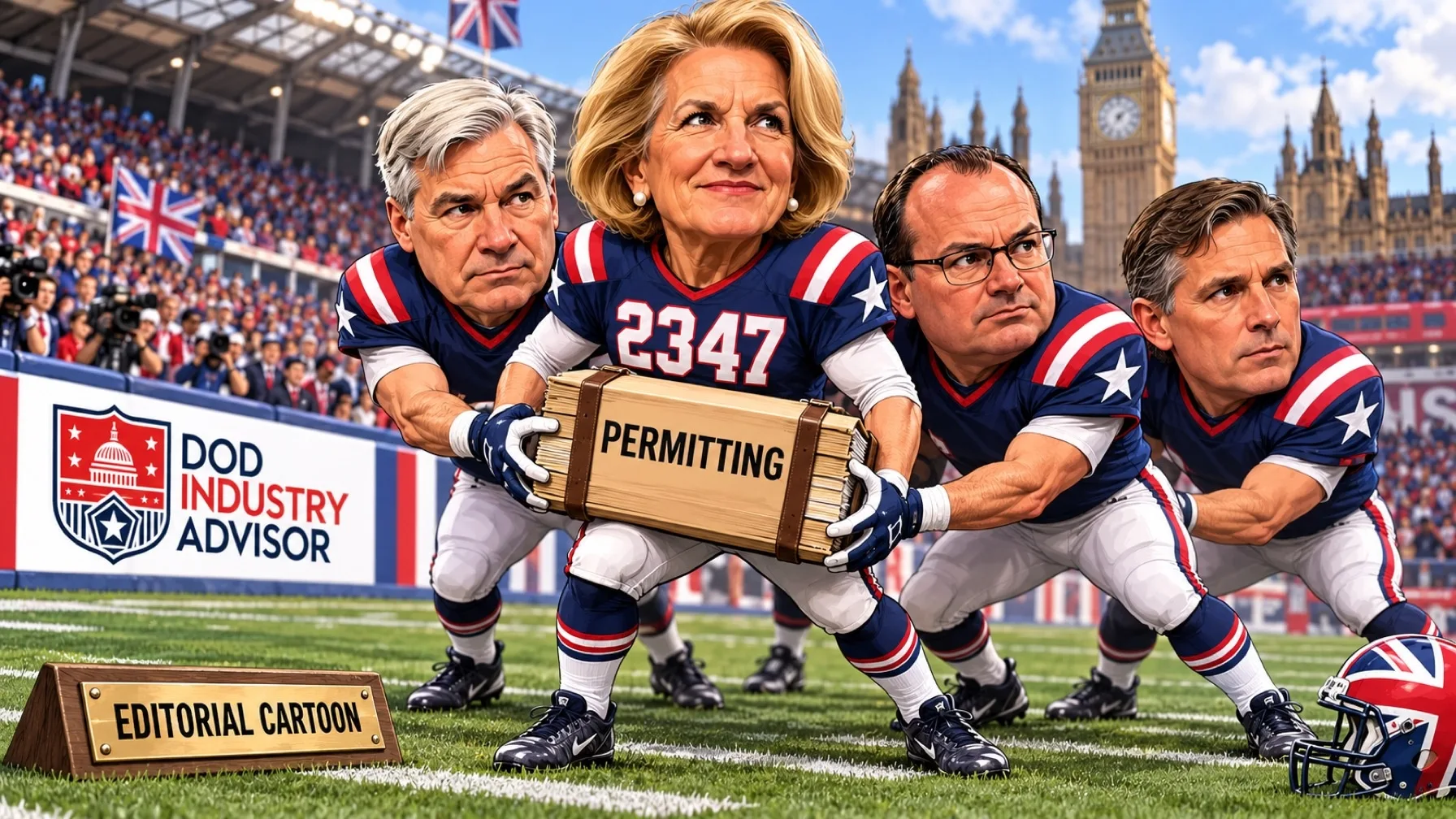
Here is the single most useful thing in the Senate’s adjournment notice, and it is easy to misread. The vote scheduled for approximately 5:30 p.m. on November 9 is cloture on the motion to proceed to Calendar #453, H.R. 2347. Look up that bill number and you will find the Survivor Justice Tax Prevention Act, a measure by Rep. Lloyd Smucker that amends the Internal Revenue Code to exclude from gross income non-punitive damages received on account of sexual acts or sexual contact. The House passed it by voice vote on April 27 — bipartisan, uncontested, and nothing to do with energy.
It is a shell. The text the Senate intends to put inside it is the Bipartisan American Affordability and Jobs Act of 2026, the permitting package released on September 30 by the chairs and ranking members of the Environment and Public Works and Energy and Natural Resources committees — Shelley Moore Capito, Sheldon Whitehouse, Mike Lee and Martin Heinrich. It rewrites pieces of NEPA, the Clean Water Act, the Endangered Species Act and the National Historic Preservation Act, and it changes how transmission lines get sited and how long anyone has to sue.
The bill number on the calendar tells you the vehicle. It does not tell you the cargo. If you track Congress by bill number alone, you will miss the thing that actually gets a vote.
Why that bill? Because the useful properties of a shell are that it has already passed the House and that nobody fought about it. A measure that cleared on a voice vote carries no bloc of members invested in its text, and a House-passed revenue bill sidesteps an argument about origination. Swapping the contents of a shell is ordinary practice, not a trick — but it means the title on the floor calendar is routinely the least informative thing on it.
For a defense small business, the practical read is short. The first thing the Senate does when it comes back is not defense. It is not the NDAA, and it is not appropriations. If you sell into environmental review, transmission, site work or construction, November 9 belongs on your board. If you are waiting on a new defense start, it is the other series, and it tells you only how the floor time gets spent in a month that also has to produce a funding bill.
What Did Not Move
Five weeks is long enough that it is worth restating what is still true, because none of it changes while the chambers are empty.
The government is funded by P.L. 119-103 at FY26 rates through December 11. Section 102(a) still bars the Department from using that money to begin production of items not funded in FY26, to raise production rates above FY26 levels, or to start a project, P-1 line or R-1 line that lacked FY26 authority. Section 104 applies the same no-new-starts rule across the government. Work that already had money keeps going. Work that did not, does not start.
The FY27 defense authorization is where it has been since July: H.R. 8800 passed the House 216–212 on July 22, Senate cloture on S. 4784 failed 50–46 on July 14, and there is no conference and no named conferees. Nothing happened to it this week because nothing could.
Count the calendar that is left. The Senate returns November 9. The continuing resolution expires December 11. That is about five sitting weeks for both chambers to pass full-year appropriations or another stopgap, and for anyone who wants an NDAA to conference one. It is not impossible — the last two election-year authorizations were both signed on December 23 — but it is a crowded month, and it starts with a permitting bill.
Weekly Digest — The Only Deadline This Week Is DIU’s
Congress has given you nothing to react to until November 9. The Defense Innovation Unit has given you nine days.
Both CLASS ACT calls close October 13: PROJ00718 for companies building sensors and effectors to defeat unmanned systems in and around maritime environments, and PROJ00719 for the investors backing them. Awards are prototype other transactions with a possible production follow-on.
One open question from the last two issues now has an answer. CLASS ACT — Classified Access to Address Critical Technology — is a 36-month pilot, and DIU states it will coordinate industrial security support to guide each selected performer through the facility-clearance process. That is the part that makes it unusual: a clearance sponsored ahead of a specific contract requirement, rather than after one. Previous issues declined to characterize that because the postings did not say it. They say it now.
The eligibility floor has not moved, and it is still the first thing to read. The vendor call is for nontraditional defense contractors with no current or prior facility clearance and U.S.-citizen key management, at TRL 7 or above, with at least $10 million in equity raised and at least $2 million in annual revenue. The investor call asks for at least $100 million in available capital and an average investment around $5 million. Most small defense businesses do not clear that floor, and nine days is not enough time to pretend otherwise. If you are under it, the useful move is not a rushed submission. It is to note where the Department chose to put the floor, because that is a statement about who it thinks it is short of.
Small Business Playbook — What a Bye Week Is Actually For
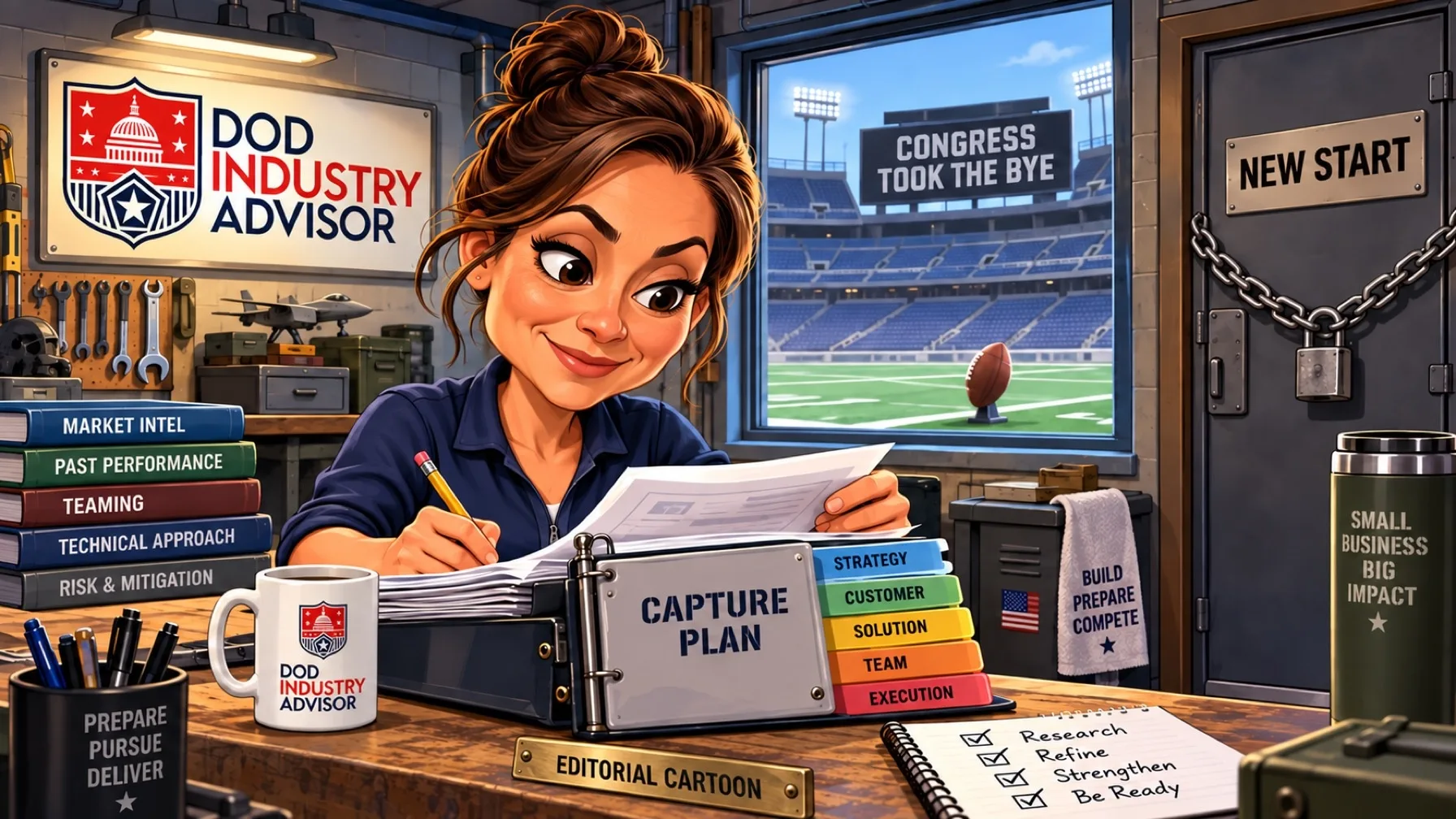
A bye is not a week off. It is the only week nobody is making you react to something. Three things worth doing with it, none of which require Congress.
1. The set-aside rule does not take a recess — and it is not a number you can memorize. FAR 19.502-2(a) requires that an acquisition of supplies or services above the micro-purchase threshold and not over the simplified acquisition threshold be set aside for small business when the contracting officer reasonably expects offers from two or more responsible small businesses competitive on price, quality and delivery — the rule of two. Notice what the regulation does not contain: dollar figures. It defines the window by reference to two thresholds that are adjusted for inflation on their own schedule, so the band moves without the rule changing a word. Look up the current values in FAR 2.101 rather than quoting a number you learned three years ago, and understand that neither a recess nor a continuing resolution suspends this. Routine buying continues while Congress is away, and this is the band most of it falls in.
2. Fix the record while nothing is due. The quiet failure modes in this business are administrative, and they surface at the worst moment. Check that your SAM registration is active and not inside its renewal window, that your representations and certifications reflect what is actually true today, and that the NAICS codes on your profile match the work you are now bidding — size standards are revised, and a code that made you small two years ago may not. Pull your CPARS entries and read them as a contracting officer would. If an evaluation is wrong or unrebutted, the window to do something about it is now, not during a proposal.
3. Rebuild one capture file against primary records. Not five. One. Take the pursuit you most believe in and reconstruct it from sources rather than memory: the actual award history and obligated amounts, the incumbent and when its period of performance ends, the office that holds the money and which appropriation it is, and whether the next action needs anything Section 102 or 104 bars. Most capture files are built from a summary somebody forwarded. Five uninterrupted weeks is exactly enough to rebuild one from the record, and that is the file that will still be right in December.
Open your SAM.gov registration and write down the expiration date. Then open your largest active pursuit and write down three things from primary sources: the incumbent’s contract number, the date its period of performance ends, and the appropriation funding it. If you cannot find all three in an hour, that is the finding — and you have four more weeks of quiet to fix it.
The Briefcase — One Page for a Five-Week Recess
There will be no congressional news to react to between now and November 9. That makes this a planning month, and the plan fits on one page.
| Question | What belongs in the answer |
|---|---|
| What is due before November 9? | Solicitation deadlines only — starting with October 13 if CLASS ACT applies to you. Nothing legislative |
| Is our paperwork current? | SAM expiration date, reps and certs reviewed, NAICS codes checked against current size standards |
| Which pursuit gets the quiet weeks? | One named opportunity, rebuilt from primary records, with the funding line identified |
| What are we assuming about December? | Written down as an assumption, not a plan — full-year bills, a second CR, and an NDAA conference are all possible and none is scheduled |
If you are already on contract, keep performing. A recess is not a stop-work order and neither is a continuing resolution. Your contracting officer is still working, and so is the rest of the buying apparatus below the legislative line.
If you are waiting on a new start, a first production lot or a rate increase, nothing between now and December 11 creates one. Plan against December at the earliest, and treat a second continuing resolution as a live possibility rather than a pessimistic one.
If you sell into permitting, environmental review, transmission or site work, November 9 is your date, and the text to read is the September 30 package — not the bill number on the calendar.
What will you actually do with five weeks of congressional silence?
A) Rebuild one capture file from primary records
B) Fix the administrative record — SAM, reps and certs, NAICS, CPARS
C) Chase the October 13 DIU deadline
D) Keep performing and ignore Washington until November
E) Honestly, wait and see what December brings
Reply with your letter and the one pursuit you would rebuild if you only had time for one. The most useful answer runs next week, anonymous if you prefer.
The Final Whistle
Washington flew eight hours to lose a quarterback in the first quarter. Congress stayed home and lost nothing, because it was not holding anything.
The continuing resolution runs to December 11. Sections 102 and 104 run with it. The first vote back is a permitting bill wearing a tax bill’s number, and it is thirty-six days away.
The bye is real. The question is whose it is.
How I Help Small Defense Businesses
You may be the owner, the business-development lead and the person checking payroll — all before lunch. The challenge is deciding which opportunity deserves the time your team actually has, especially in a five-week stretch when Washington produces no news and it is tempting to produce none either.
Through DoD Industry Advisor, I help small defense businesses turn market information into a pursuit decision: examining the buyer, the funding signals, the incumbent and the timing; identifying the gaps in your position; and building a practical plan for what to do next. I also help with proposal and briefing materials when the pursuit calls for them. Explore DIA’s services.
Bring one opportunity you are weighing and the decision you need to make. We can scope the work around whether to pursue it, what needs more evidence, and where your effort belongs over the next 90 days.
Request a 30-minute fit call with DoD Industry Advisor. Start with a non-sensitive summary of your business, the opportunity and your deadline. We will determine fit and define a written scope before work begins.
Sources checked
CONFIRMED
- Senate adjournment and pro forma schedule: Eleven pro forma sessions announced — Oct. 5 (4:00 p.m.), Oct. 6 (1:30 p.m.), Oct. 9 (1:30 p.m.), Oct. 13 (3:30 p.m.), Oct. 15 (9:30 a.m.), Oct. 19 (9:00 a.m.), Oct. 22 (9:00 a.m.), Oct. 26 (5:30 p.m.), Oct. 29 (2:00 p.m.), Nov. 2 (4:30 p.m.), Nov. 5 (10:30 a.m.) — then adjourned until 3:00 p.m. Monday, Nov. 9, 2026, with one roll call at approximately 5:30 p.m.: cloture on the motion to proceed to Cal. #453, H.R. 2347. A twelfth pro forma, Oct. 1 at 10:30 a.m., has already occurred. Verified 2026-10-04. Senate schedule notice, Sep. 30 · Senate Daily Press, Oct. 1
- Senate state work period: Oct. 5 – Nov. 6, 2026. Verified 2026-10-04 and carried from Issue #28. senate.gov 2026 schedule
- Last Senate roll calls: Vote 256, Sep. 30 at 9:29 p.m. — Sonderling (PN1129) confirmed Secretary of Labor, 47–41, 12 not voting; vote 255, cloture on that nomination agreed 53–47; vote 254, cloture on H.R. 9340 rejected 57–43; vote 253, cloture on H.R. 7008 rejected 53–47; vote 252, Sep. 29, discharge of S. Res. 852 rejected 47–51; vote 251, Sep. 29, motion to proceed to S.J. Res. 197 rejected 48–51; vote 250, Sep. 28, S. 4668 passed 77–22. Vote 256 is the last of the session. Verified 2026-10-04. Senate roll call votes, 119th Congress, 2nd session
- House: Last recorded votes Sep. 16, 2026. Roll Call 314 — S. 2403, Retire through Ownership Act, on motion to suspend the rules and pass, agreed 401–14 (0 present, 18 not voting) at 7:05 p.m. Pro forma session Monday, Oct. 5 at 4:30 p.m.; next votes expected Monday, Nov. 9. Verified 2026-10-04. House Clerk, Roll Call 314 · House Press Gallery · House Republican Cloakroom
- H.R. 2347 as the permitting vehicle: H.R. 2347, Survivor Justice Tax Prevention Act (Rep. Lloyd Smucker, PA-11), amends the Internal Revenue Code to exclude from gross income damages, other than punitive damages, received on account of any sexual acts or sexual contact. Reported by Ways and Means in March 2026; passed the House by voice vote April 27, 2026; now Senate Calendar #453. It is the legislative vehicle for the permitting package. Verified 2026-10-04. H.R. 2347 (EH), govinfo · Holland & Knight · Bipartisan Policy Center
- Bipartisan American Affordability and Jobs Act of 2026: Released Sep. 30, 2026 by EPW Chairman Capito, EPW Ranking Member Whitehouse, ENR Chairman Lee and ENR Ranking Member Heinrich. Amends NEPA, the Clean Water Act, the Endangered Species Act, the Federal Power Act and the National Historic Preservation Act, with transmission-siting and judicial-review provisions. Verified 2026-10-04. EPW majority release · ENR release
- P.L. 119-103: Signed Sep. 2, 2026. Sec. 101 FY26-rate continuation for FY27; Sec. 102(a)(1)–(3) new-production, rate and P-1/R-1 bars (DoD); Sec. 104 government-wide no-new-starts; Sec. 106(3) end date Dec. 11, 2026. Carried from Issue #28; no amending action since. Verified 2026-10-04. enrolled text
- FY27 NDAA: H.R. 8800 passed the House 216–212, Jul. 22, 2026 ($1.15T topline); S. 4784 ($1.14T) cloture failed 50–46, Jul. 14, 2026, and the Senate has taken no further procedural step. No conference and no conferees. Re-verified independently 2026-10-04, not merely carried. CRS IN12704
- Election-year NDAA precedent: FY2023 NDAA (P.L. 117-263) signed Dec. 23, 2022; FY2025 NDAA (P.L. 118-159) signed Dec. 23, 2024. Verified 2026-10-04.
- DIU CLASS ACT: Classified Access to Address Critical Technology, a 36-month pilot. PROJ00718 (maritime counter-UxS sensors and effectors) and PROJ00719 (investors), both closing Oct. 13, 2026. Vendor eligibility: nontraditional, no current or prior facility clearance, U.S.-citizen key management, TRL 7+, ≥$10M equity raised, ≥$2M annual revenue. Investor eligibility: ≥$100M available capital, average investment about $5M. Prototype OT with possible follow-on production. DIU states it will coordinate industrial security support through the facility-clearance process. Verified 2026-10-04. PROJ00718 · PROJ00719
- FAR 19.502-2(a): The regulation sets the automatic set-aside window by reference — “above the micro-purchase threshold, but not over the simplified acquisition threshold” — and states the rule of two. It contains no dollar figures; the thresholds are defined in FAR 2.101 and adjusted for inflation. Verified 2026-10-04. FAR 19.502-2
- NFL Week 4, London: Colts 30, Commanders 13, Sunday Oct. 4, 2026, Tottenham Hotspur Stadium. Mariota left in the first quarter with a right knee injury after a sack by Laiatu Latu, with Washington leading 6–0; Jayden Daniels was already out. Athan Kaliakmanis finished — selected by Washington in the seventh round, 223rd overall, in the 2026 draft. Verified 2026-10-04. Washington Post · Commanders
ASSESSMENT
- The Senate adjourning on Sep. 30 rather than Oct. 2 is read here as leaving early, not as a schedule change announced in advance; the pro forma notice was published Sep. 30.
- “About five sitting weeks” between Nov. 9 and Dec. 11 is arithmetic on the calendar, not a published session schedule for the lame duck.
- The characterization of H.R. 2347 as a shell is standard legislative practice and is supported by the sources above, but the substitute text has not been filed on the floor; the Senate has noticed only the motion to proceed.
- The CLASS ACT eligibility floor is described as a signal about where the Department sees a gap. That is an interpretation, not a DIU statement.
- A second continuing resolution in December is a live possibility, not a prediction.
UNKNOWN — not found, not invented
- Whether the Nov. 9 cloture vote has the 60 votes to proceed: no public whip count. Not characterized.
- The severity and expected absence for Mariota’s knee injury: reported as a possible MCL concern, no team designation at press time. Stated only as a first-quarter exit.
- Any announced lame-duck schedule for appropriations or an NDAA conference beyond the Nov. 9 vote: none located.
- Current dollar values of the micro-purchase and simplified acquisition thresholds: deliberately not stated, because they are inflation-adjusted and the article’s point is that the reader should look them up rather than recall them.
- Week 4 results beyond the London game, and any defense-relevant Oct. 1–3 contract actions: not surveyed for this issue.
Source presentation is carried in the article body where applicable. Reported facts and analytic judgment are kept distinct.