
The Knicks came home up 2-0 in the NBA Finals. Trump wanted a ballroom and a reconciliation win. The Senate gave him the border bill, stripped the chandelier money, and left contractors staring at an NDAA right-to-repair fight that suddenly matters more than the halftime show.
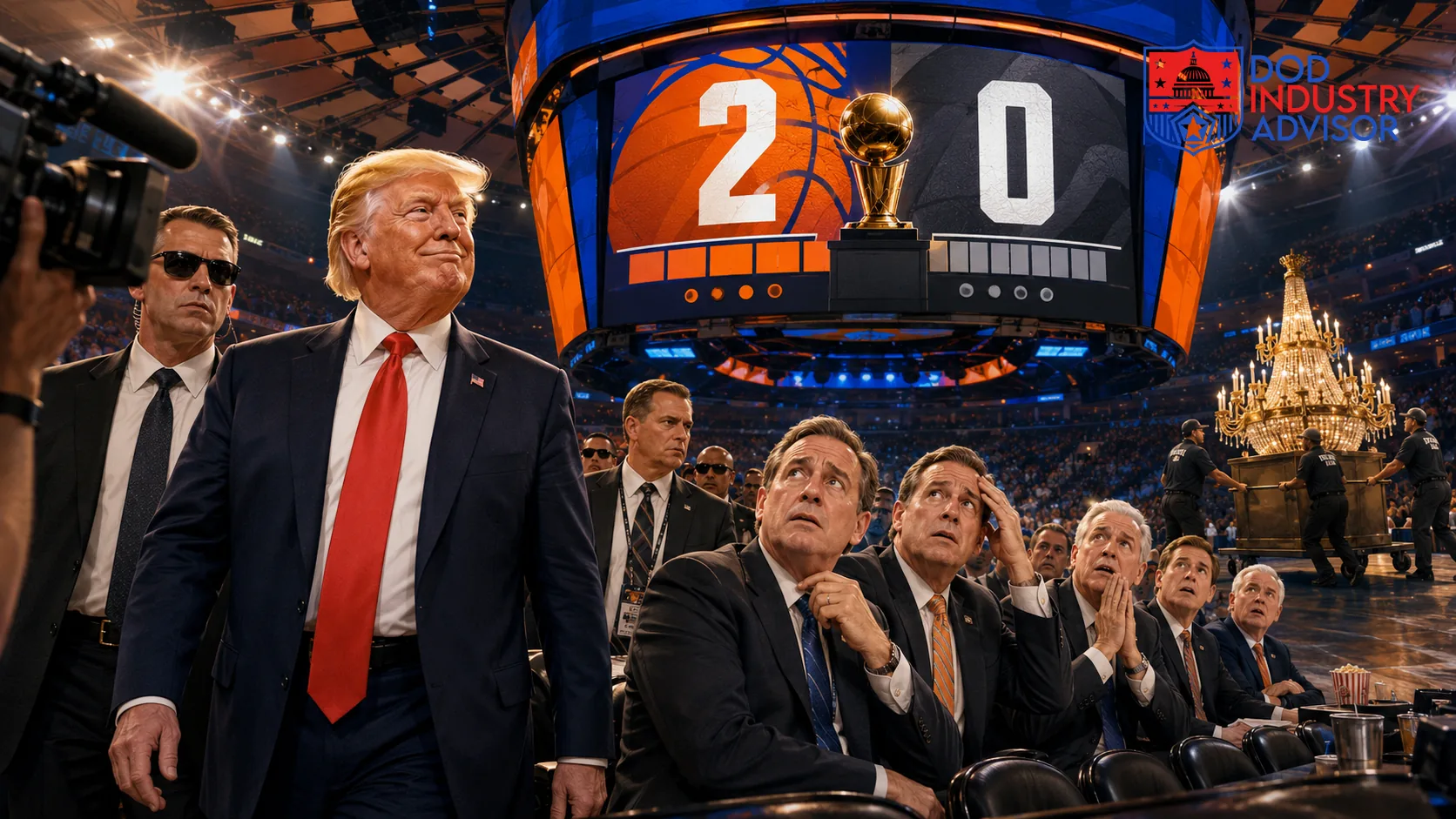
The Knicks went into San Antonio, stole both Finals games, and came home two wins from a title. President Trump decided this was the week to return to Madison Square Garden as the most complicated celebrity fan in America. The Senate, meanwhile, ran its own overnight game: a reconciliation vote-a-rama that passed S. 2, the Secure America Act, out of the Senate for ICE and Border Patrol, stripped out the White House ballroom money, and still left Democrats with enough amendment tape for a month of ads. Then House Armed Services moved a $1.15 trillion FY27 NDAA, kept Space Force satellite programs alive, and adopted right-to-repair language that could change who owns the technical data after a defense contract closes. For small contractors, the week was not really about basketball. It was about leverage: who has it, who lost it, and who is about to discover that the fine print is guarding the paint.
There is a very specific kind of silence that happens when the road team wins the first two games of a Finals series. It is not panic. Panic is loud. This is math entering the room in expensive shoes. The Knicks beat the Spurs 105–95 in Game 1, then survived Game 2 by one point after Victor Wembanyama turned it over, fouled, missed the last jumper, and watched New York fly home with a 2–0 lead and thirteen straight playoff wins. Game 3 is Monday at Madison Square Garden, where the worst seats are priced like a used truck and the President of the United States is expected to walk through enhanced security to root for the team he has not seen this close to a championship since the city still used phone booths.
Washington had the same week, only with worse spacing. Trump wanted the ballroom. The Senate wanted the border bill. Democrats wanted recorded votes. Republicans wanted the whole thing over before anyone looked too closely at the chandelier. So they did what Congress does when the play breaks down: they ran a 19-hour vote-a-rama, stripped the most embarrassing money, muscled the bill through, and called it a set offense.
That is the useful frame for the week. The Knicks are up two because the ball moved late. The reconciliation bill moved because the ballroom got benched. And the defense industry just learned that the next NDAA fight may not be about topline money at all. It may be about who gets the repair manual after the buzzer.
The Garden Scoreboard
Everybody wanted to leave the week up 2–0. Only one team did it cleanly.
| Possession | Status | Score |
|---|---|---|
| New York Knicks | Beat San Antonio twice on the road; Game 3 returns to MSG Monday with Trump expected in attendance | ▲ Up 2–0 |
| Secure America Act | Senate passed the ICE/CBP reconciliation bill after an overnight vote-a-rama | ▲ Cleared Senate |
| White House Ballroom | $1B security-related funding stripped from the reconciliation package amid GOP resistance and parliamentarian problems | ▼ Benched |
| FY27 NDAA | HASC advanced H.R. 8800, authorizing $1.15T in discretionary defense funding | ▲ Out of committee |
| Defense IP Owners | Right-to-repair language would make government-purpose rights the default for delivered technical data and software unless contractors justify tighter restrictions | — Under review |
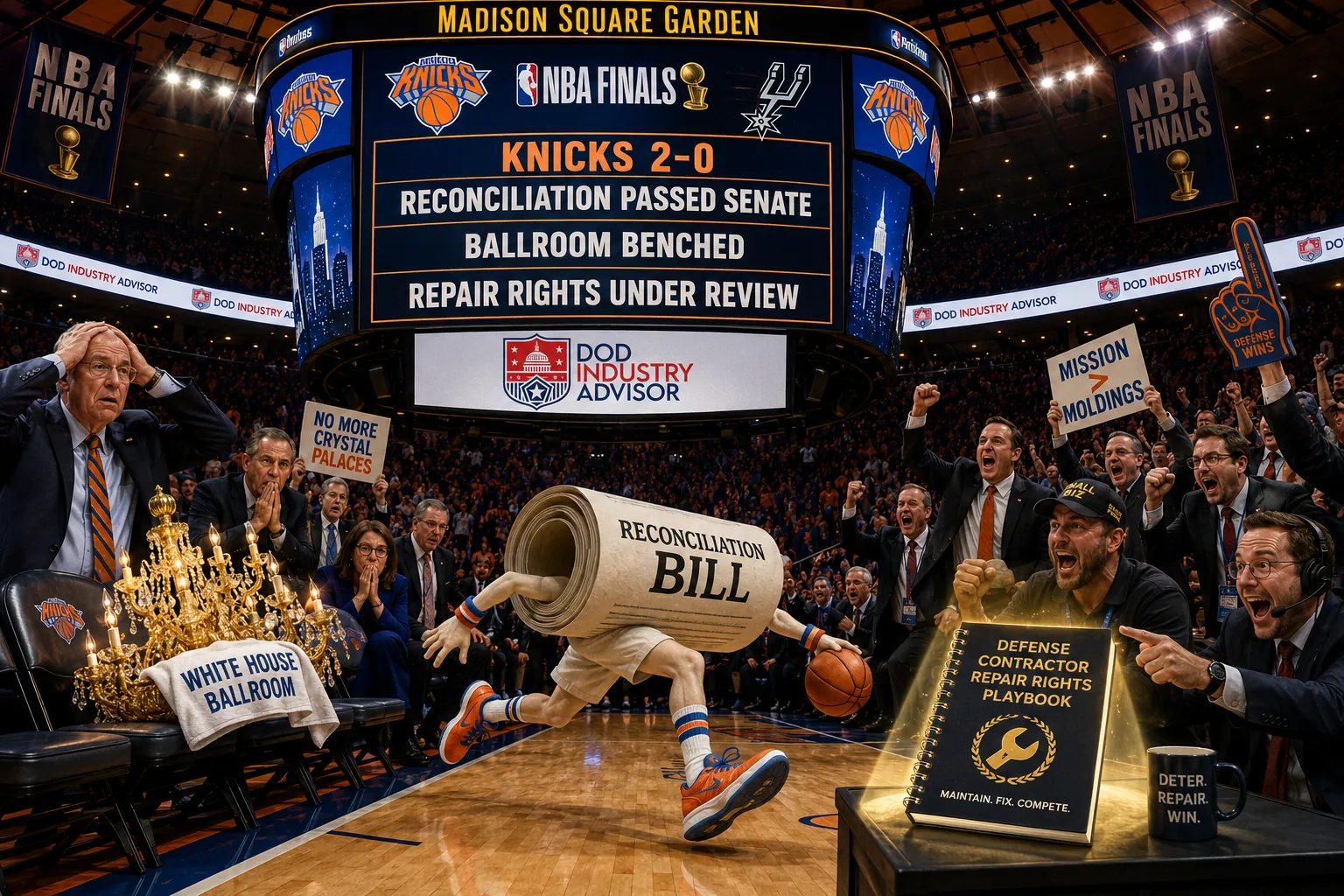
The Ballroom Got Cut From The Rotation
The Senate’s immigration-enforcement reconciliation bill had two jobs this week: fund ICE and Border Patrol, and stop the White House ballroom from becoming the political equivalent of dribbling off your own foot. It mostly managed the first one. After weeks of internal GOP heartburn over the administration’s anti-weaponization fund and the optics of ballroom money, Senate Republicans stripped the proposed $1 billion security-related ballroom funding from the package and pushed the Secure America Act through the Senate, 52–47. Senator James Lankford called the vote-a-rama a 19-hour slog and said the bill fully funds ICE and Border Patrol for the next three years. Senator John Barrasso said Republicans had honored their first duty to public safety. Democrats called it a mass-deportation bill and spent the floor process forcing the kind of amendments members hate because every answer becomes a campaign ad.
“For 19 hours, I joined my Senate Republican colleagues to vote down amendment after amendment.” — Sen. James Lankford, after the Secure America Act vote-a-rama
The important part for contractors is not the cable-news fight. It is the funding lane. ICE, CBP, detention capacity, border surveillance, case-management systems, data platforms, identity tools, transportation, facilities, and contractor support tied to immigration enforcement now have a clearer Senate-side vehicle than they had last week. But anything that depended on decorative political gravity got a warning label. If your opportunity depends on a project being so personally important to the President that normal appropriations, authorizations, committee jurisdiction, and the Senate parliamentarian all agree to look away, price that as spectacle, not backlog.

The Repair Manual Is The Real Fight
While the Senate was running suicides, House Armed Services did the thing defense people actually get paid to watch: it advanced the FY27 NDAA. Chairman Mike Rogers said the bill authorizes $1.15 trillion in discretionary defense funding and supports a $1.5 trillion FY27 topline. The committee reported H.R. 8800 by a 44–12 vote after a long markup. The obvious headlines are industrial-base capacity, munitions, shipbuilding, missile warning, and the committee’s decision to challenge the Space Force’s attempt to kill the Next-Gen OPIR Polar satellite program. But the knife in the drawer is right-to-repair.
The amendment from Reps. Maggie Goodlander and Pat Harrigan would push future DoD contracts toward government-purpose rights by default for delivered technical data, software, and documentation, unless the contractor can show why tighter IP restrictions should survive. Industry hates this for understandable reasons. The Pentagon likes it for understandable reasons. Small businesses should treat both sides as telling the truth about different parts of the animal. If you are a software, autonomy, sensor, sustainment, or component firm, this is not an abstract policy fight. It is your valuation, your teaming leverage, your exit story, your subcontract flow-down, your data marking discipline, and the difference between selling a box and giving the government the wrench that opens it.
Before you sign another defense subcontract, find the technical-data and software-rights clause. If your answer is “legal has it,” you do not have an answer. Ask exactly what is delivered, how it is marked, who paid to develop it, what rights the prime can pass to the government, and whether a future right-to-repair rule turns your proprietary advantage into a government-purpose asset.
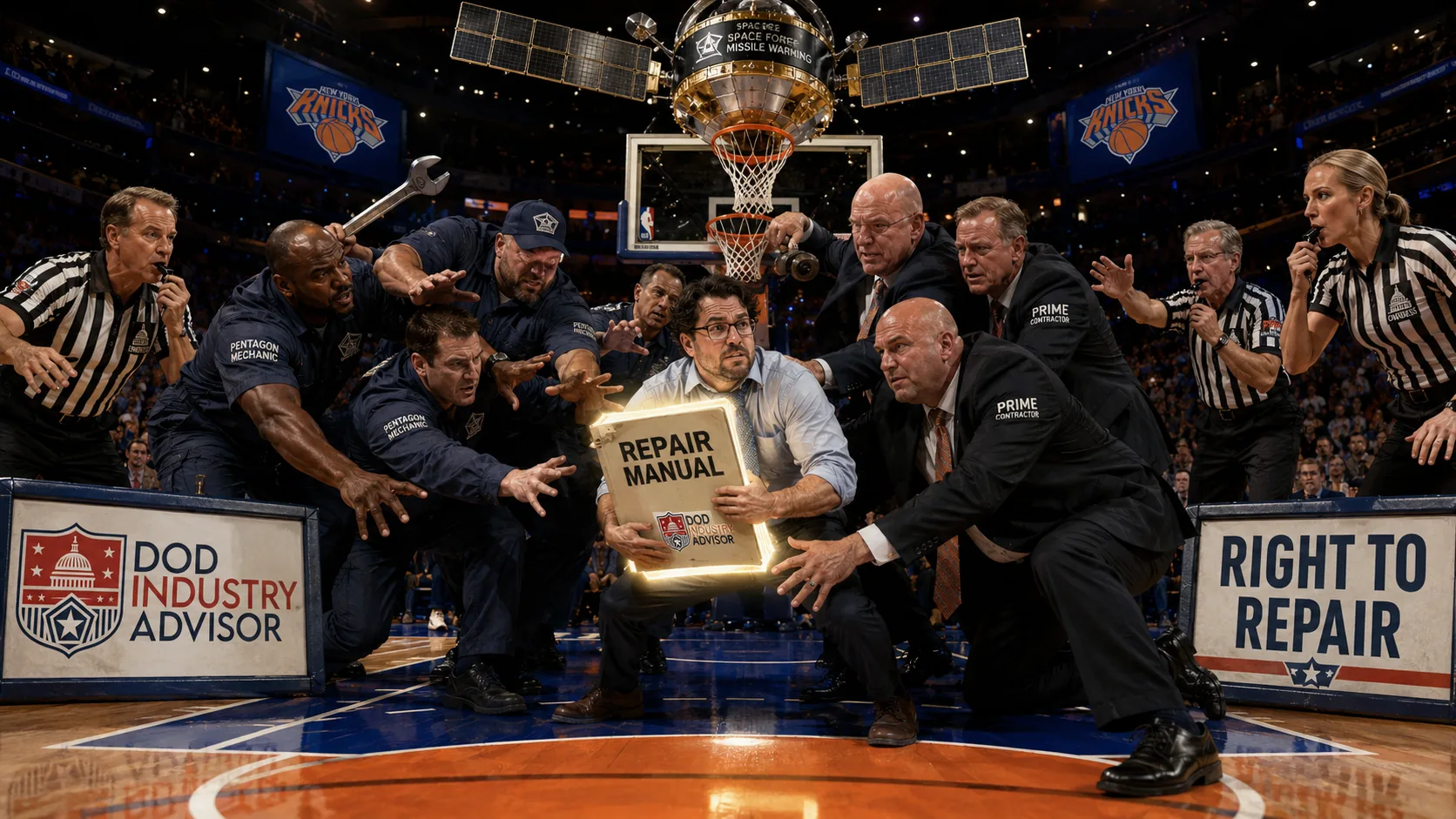
Last Week Was About Money That Wasn’t There. This Week Is About Money With Strings.
Last issue, the Senate left town with reconciliation unresolved and the defense ramp still leaning on promises. This week, one reconciliation bill moved, but the way it moved tells you the summer pattern: the White House can get a lot from a Republican Senate, but not everything, not always, and not when the ask looks like a gold-plated fast break with no defensive assignment. At the same time, the NDAA is showing that Congress is willing to fund the arsenal while asking whether contractors have been making the arsenal too hard to repair, too expensive to sustain, and too locked behind proprietary doors.
That is the pivot small businesses should care about. Money is coming with conditions. Border work may move faster. Defense authorization is moving. Space programs may get congressional lifelines. But IP, sustainment, auditability, and repair rights are moving from side conversations into the main bill. The winners are the firms that can explain their data rights before the contracting officer asks, that can show which parts of their technology are privately funded, and that can partner without accidentally donating their crown jewels to a prime’s deliverables table.
What This Means for You
• Border-tech vendors should watch the House clock: Senate passage improves the funding picture for ICE and CBP, but the House still has to process the bill. Do not book revenue until you know whether your line is in the final text, the timing of obligation, and whether oversight amendments changed reporting requirements.
• Defense subs need a data-rights scrub now: right-to-repair language is a direct hit on sloppy IP hygiene. Inventory technical data, software, models, test procedures, firmware, drawings, and manuals before a prime writes them into your CDRL package.
• Space and missile-warning firms got a signal: HASC’s move to keep Next-Gen OPIR Polar alive says Congress may resist architecture cancellations when coverage, sunk cost, and regional risk are politically legible. If your program has a similar story, build the Hill packet before the budget ax falls.
• Do not chase ballroom-shaped opportunities: if the value proposition depends on proximity to a personality rather than a program line, a statutory authority, and a committee with jurisdiction, treat it like a Finals ticket: expensive, fun, and not a capture strategy.
The Reader’s Box
What is the one clause in your standard subcontract that would hurt most if Congress made government repair rights the default: technical data, software, source code escrow, data marking, payment terms, or prime flow-down? Reply with the clause. Best answer runs next week, anonymous if needed.
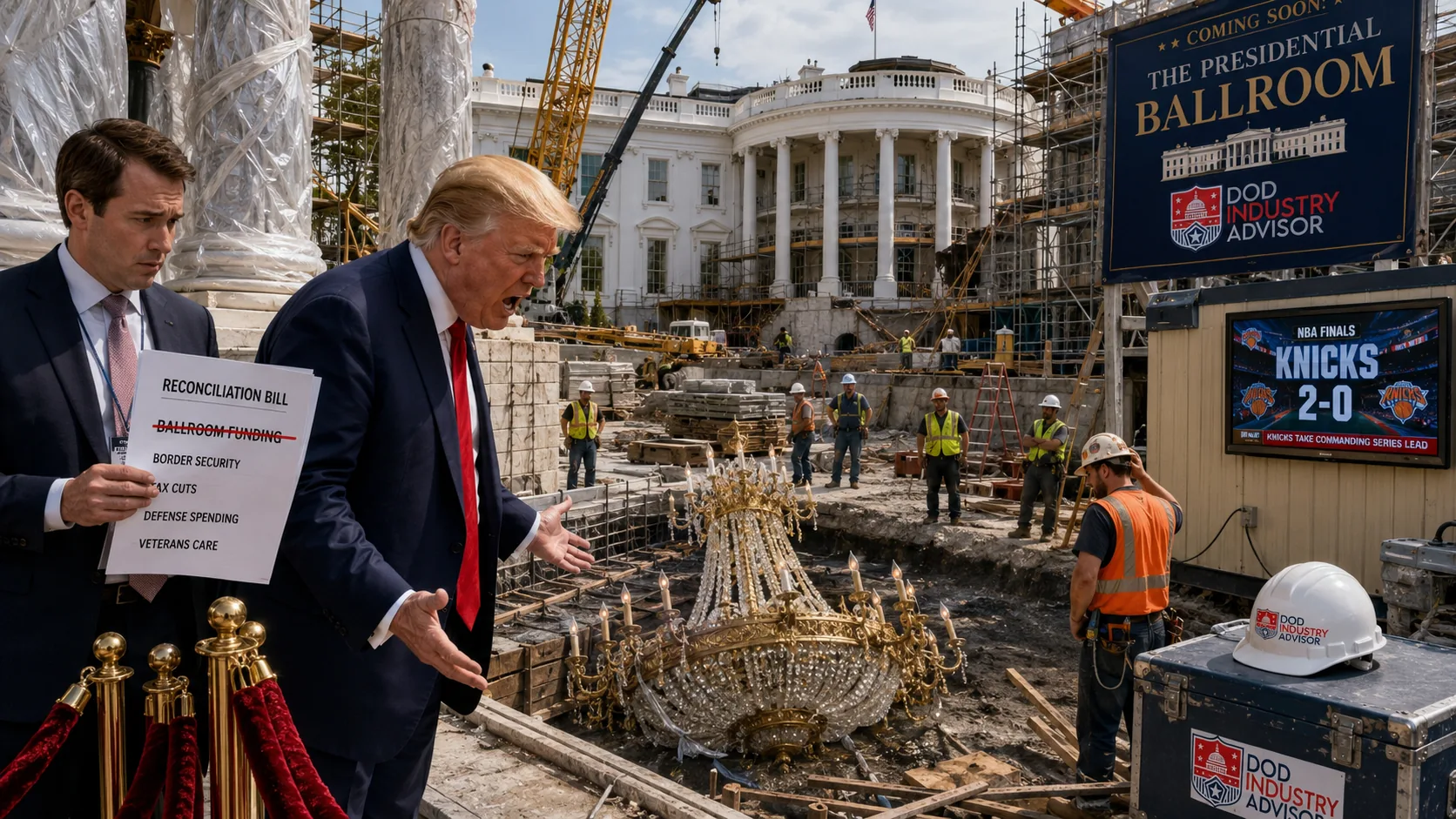
Source presentation is carried in the article body where applicable. Reported facts and analytic judgment are kept distinct.