
For the first time since the 1870s the Preakness left Pimlico. The 151st ran at Laurel Park, twenty miles down the parkway from the Capitol, and a longshot named Napoleon Solo ran off and left the field. Same week, the Senate’s 7th Iran war powers resolution failed 49–50 — Lisa Murkowski finally crossed over — the House tied 212–212, Kevin Warsh was confirmed Fed Chair 54–45, President Trump ran a solo summit in Beijing, and the Strait of Hormuz stayed shut. Your Preakness briefing.

- The Senate’s 7th Iran war powers resolution failed 49–50 on Wednesday, May 13. S.J.Res. 163 (Merkley). Lisa Murkowski (R-AK) crossed over for the first time, joining Collins and Paul — three Republican yes votes. It still lost, because John Fetterman (D-PA) was the deciding Democratic NO. One vote.
- The House tied 212–212 on Thursday, May 15 on its own war powers resolution (Gottheimer). Under House rules a tie is a defeat. Three Republicans crossed (Barrett, Fitzpatrick, Massie); one Democrat (Golden) voted no.
- Kevin Warsh was confirmed Chair of the Federal Reserve, 54–45. Cloture invoked 51–45 on Monday. Fetterman was again the lone Democratic yes. Powell’s term as Chair ended May 15; Warsh was sworn in.
- President Trump made a state visit to Beijing, May 13–15 — the first sitting U.S. president in China in nearly a decade. Heavy pageantry, light deliverables: China to buy U.S. oil and 200 Boeing jets (industry had floated 500), a rhetorical pledge to keep Hormuz open, and a Taiwan warning from Xi. Trump invited Xi to the White House on September 24.
- The Strait of Hormuz is still closed. Open transits have fallen to near zero since May 6. The IRGC Navy redefined the strait as a “vast operational area.” Project Freedom remains paused; the U.S. naval blockade of Iranian ports remains in force.
- The record DHS shutdown ended. The House passed an amended DHS appropriations package (H.R. 7147) and the President signed it — reopening most of the department on roughly day 92. ICE and Border Patrol funding was carved out to a separate reconciliation track.
- FY27 defense appropriations hearings resumed. HAC-D heard Gen. Dan Caine and SecDef Hegseth on the Department of Defense, and Adm. Daryl Caudle and Gen. Eric Smith on the Navy and Marine Corps.
- Preakness: a 14-horse field — the largest in 15 years — ran the slowest Preakness in 75 years. Napoleon Solo won by 1¼ over favorite Iron Honor. First Preakness for trainer Chad Summers and jockey Paco Lopez.
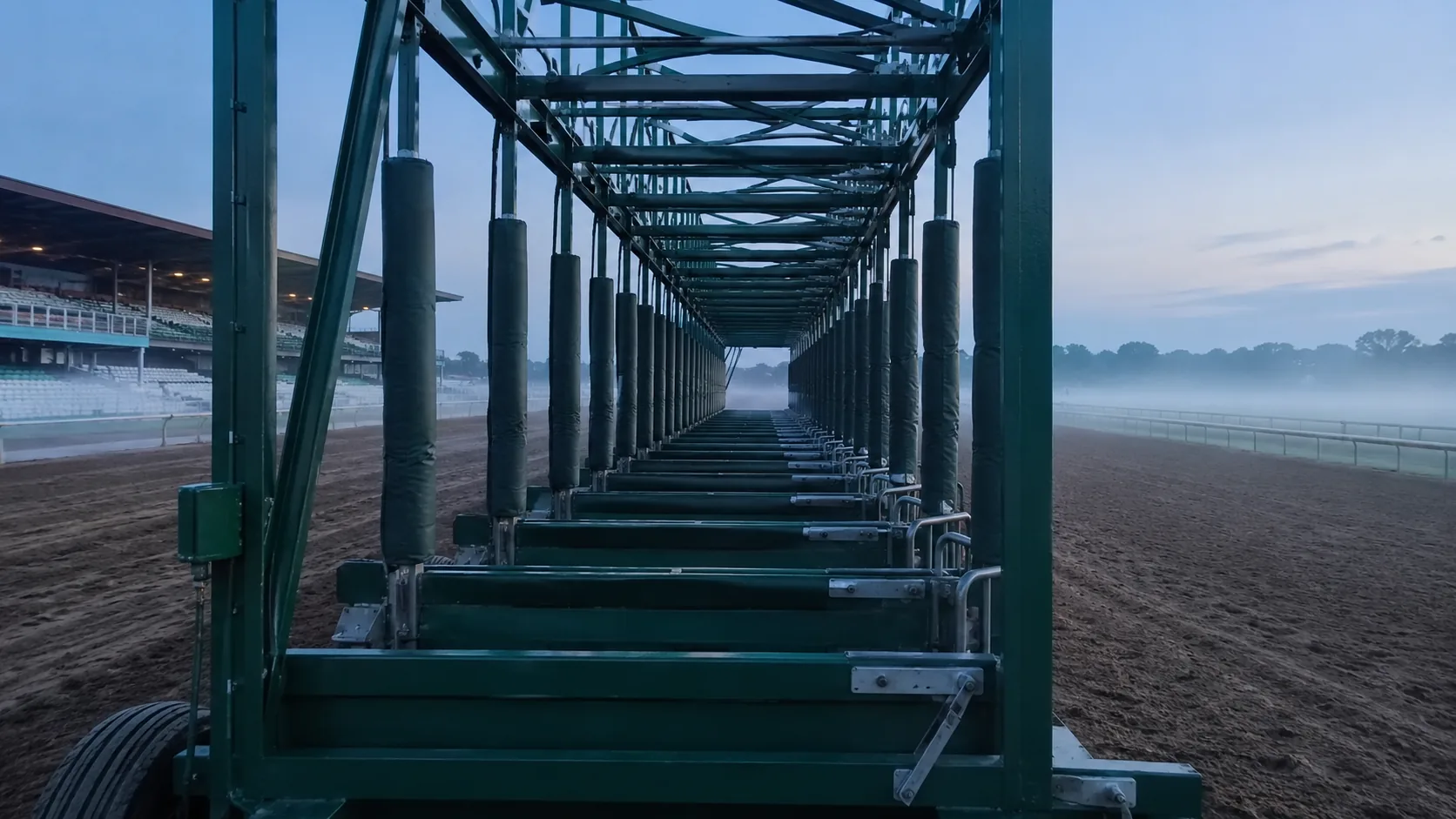
The third Saturday in May. The 151st Preakness Stakes. And for the first time since the race was founded in the 1870s, it did not run at Pimlico.
Pimlico Race Course in Baltimore is in the middle of a reported $400 million teardown-and-rebuild, owned and operated now by the state of Maryland, so the middle jewel of the Triple Crown packed up and moved twenty miles down the Baltimore-Washington Parkway to Laurel Park — close enough to the Capitol to be a federal commute. An institution a century and a half old ran the most important day of its year somewhere that was not its home. Hold that thought.
The favorites did what favorites have been doing all spring. Brittany Russell sent out Taj Mahal — her shot at becoming the first woman ever to train a Preakness winner, two weeks after Cherie DeVaux did exactly that at the Derby — and Taj Mahal went straight to the lead, carved out a half-mile in 46.66, and led the field all the way to the top of the stretch. Then he stopped. Iron Honor, the prerace favorite, tried to run him down and could not get there either. The horse who got there was a colt named Napoleon Solo — fifth in each of his last two starts, a longshot in a 14-horse field, the largest Preakness field in fifteen years. He took the lead at the top of the lane and ran off by a length and a quarter. The final time, 1:58.69, was the slowest Preakness in seventy-five years. It did not matter. He still won going away. He paid $17.80.
A horse named Napoleon Solo ran off and left the field. It is a useful frame for the week Washington had.
On Wednesday, May 13, the Senate took up S.J.Res. 163, Sen. Jeff Merkley’s resolution — the seventh Iran war powers measure since the campaign began on February 28. The motion to discharge failed 49–50. The headline: Lisa Murkowski (R-AK) finally crossed over, joining Susan Collins and Rand Paul. Three Republican yes votes — enough, on paper, to pass it. It lost anyway, because John Fetterman (D-PA) again voted no, and this time his was the deciding vote. The favorite led the whole way and got caught at the wire. Two days later the House ran its own version and tied, 212–212. Under House rules a tie is a loss. Congress went 0-for-2 on the same question in the same week and lost one of them by nothing at all.
Meanwhile the executive branch ran alone. Kevin Warsh was confirmed Chair of the Federal Reserve, 54–45, and sworn in as Jerome Powell’s term ended Friday. And the President spent Wednesday through Friday in Beijing — the first sitting American president to make a state visit to China in nearly a decade — shaking hands with Xi Jinping while the Strait of Hormuz stayed shut, open transits at roughly nothing since May 6. Napoleon. Solo. The name was on the tote board and in the read-out of the week at the same time.
Pads on. The bugler at Laurel played “Maryland, My Maryland.” Pour the rye.
Xs & Os: The Congressional Card — The Middle Jewel
The 151st Preakness ran the largest field in fifteen years over the slowest track in seventy-five. The Congressional card ran five races, and the two closest finishes were the two that mattered most.
| Pos | Senator | Notes |
|---|---|---|
| WIN | The motion to table | 49–50 — seventh straight Senate win for the executive branch on this beat |
| PLACE | Lisa Murkowski (R-AK) | First YES — crossed after Hegseth told lawmakers airstrikes could resume without Congress |
| SHOW | Collins (R-ME) & Paul (R-KY) | Both YES again — the three-Republican bloc is now real |
| ALSO RAN | Jeff Merkley (D-OR) | Sponsor: “both sides are engaged in a daily war” |
| SCRATCHED | John Fetterman (D-PA) | Lone D voting NO — the deciding vote. The resolution passes if he flips. |
| Field | Detail |
|---|---|
| RESULT | 212–212 — a tie. Under House rules, a tie vote means the measure fails. |
| SPONSOR | Rep. Josh Gottheimer (D-NJ) |
| CROSSED OVER | Reps. Tom Barrett (R-MI), Brian Fitzpatrick (R-PA), Thomas Massie (R-KY) |
| CROSSED BACK | Rep. Jared Golden (D-ME) — lone Democratic NO |
| MARGIN | Zero. The closest Congress has come, in either chamber, since February 28. |
| Field | Detail |
|---|---|
| WIN | Kevin Warsh confirmed Chair of the Federal Reserve, 54–45 |
| POST | Cloture invoked Monday, 51–45; up to 30 hours of post-cloture debate burned through the week |
| BUZZER-BEATER | John Fetterman (D-PA) again the lone Democratic YES — third straight crossover after the budget and Iran |
| TRACK CONDITION | Powell’s term as Chair ended May 15; Warsh sworn in, no gap |
| Field | Detail |
|---|---|
| WIN | President Trump — first sitting U.S. president to make a state visit to China in nearly a decade |
| PURSE | China to buy U.S. oil and ~200 Boeing jets (industry had floated 500); rhetorical pledge to keep Hormuz open |
| STEWARD’S INQUIRY | Xi warned of “clashes and even conflicts” if Taiwan is mishandled |
| REMATCH | Trump invited Xi to the White House on September 24 |
| Field | Detail |
|---|---|
| WIN | H.R. 7147 — House passes an amended DHS package, President signs it, record shutdown ends ~day 92 |
| FUNDED | TSA, FEMA, Secret Service, Coast Guard, CISA — ~260,000 employees, pay restored |
| CARVED OUT | ICE and Border Patrol funding pushed to a separate reconciliation track |
| UNDERCARD | FY27 HAC-D hearings: Caine & Hegseth on DoD; Caudle & Smith on Navy/Marine Corps |
The scoring play of the week: a 212–212 tie. In horse racing a dead heat splits the purse and both horses go in the book as winners. In the House of Representatives a tie means the motion is rejected and nobody’s name goes anywhere. Congress ran the race of the year and finished it in a dead heat with itself.
| Team | Record | Trend |
|---|---|---|
| Executive Branch on War Powers | 7–0 in the Senate, plus the House tie | Stakes-class form |
| Congress (collectively) on War Powers | 0–7 Senate, 0–1 House — closest margin yet | Closing fast, still maiden |
| DHS contractors | Shutdown over, ~day 92; pay restored | Off the also-eligible list |
| Strait of Hormuz | Open transits near zero since May 6 | Effectively scratched |
| Federal Reserve | New Chair seated 54–45 — nine Democratic votes short of bipartisan | New silks, new variance |
The Big Five
1. The Slow Track: The 7th Iran War Powers Vote Fails 49–50 — and the House Ties 212–212
On Wednesday, May 13, the Senate voted 49–50 against the motion to discharge S.J.Res. 163 from the Foreign Relations Committee. The resolution, led by Sen. Jeff Merkley (D-OR), would have directed the President to remove U.S. armed forces from hostilities in or against Iran unless Congress explicitly authorized the conflict by a declaration of war or a specific authorization for use of military force. It was the seventh such Senate vote since the campaign began February 28.
The change from the previous six: Sen. Lisa Murkowski (R-AK) voted yes for the first time, joining Sen. Susan Collins (R-ME) and Sen. Rand Paul (R-KY). Three Republican yes votes. On a fully attended 100-seat floor that is a majority — except attendance was not full, and the resolution still lost, because Sen. John Fetterman (D-PA) again voted no. Had Fetterman voted with his caucus, the three Republican crossovers would have carried it. He did not. His was the deciding vote.
Murkowski explained her flip in plain terms: she had wanted clarity from the administration after the 60-day War Powers clock lapsed on May 1, and instead heard SecDef Pete Hegseth tell lawmakers that the United States might resume airstrikes on Iran without congressional approval. The administration’s position is that the 60-day clock never applied — that the hostilities which began February 28 legally “terminated” with the April 7 ceasefire. Merkley’s answer on the floor: “both sides are engaged in a daily war.”
Two days later, on Thursday, May 15, the House ran its own privileged war powers resolution, sponsored by Rep. Josh Gottheimer (D-NJ). It tied, 212–212. Under House rules, a tie vote means the question is not agreed to — the measure fails. Three Republicans crossed over (Reps. Tom Barrett of Michigan, Brian Fitzpatrick of Pennsylvania, and Thomas Massie of Kentucky); one Democrat, Rep. Jared Golden of Maine, voted no. The closest Congress has come, in either chamber, in eleven weeks — and it came up exactly one seat short in one chamber and exactly even in the other.
“Both sides are engaged in a daily war.” — Sen. Jeff Merkley (D-OR) on the Senate floor, rejecting the administration’s position that hostilities legally “terminated” with the April 7 ceasefire.
The math has now genuinely tightened. A three-Republican bloc — Murkowski, Collins, Paul — plus a 212–212 House tie means a single additional defection in either chamber flips an outcome. That moves Iran withdrawal from a messaging exercise to a live legislative risk for the first time. If you are modeling Q3–Q4 defense subcontract pipelines on continued Gulf operations, you now need a real tail-risk branch in which Congress forces an early de-escalation: what happens to your option year, your sustainment backlog, your deployed-footprint billing if operations are ordered wound down on 30 days’ notice. Build the scenario before your prime asks you to.
2. The Closeout: Kevin Warsh Is Confirmed Fed Chair, Powell’s Term Ends
The Senate returned from recess Monday, May 11, and went straight to the Federal Reserve. Cloture on Kevin Warsh’s nomination to chair the Board of Governors was invoked 51–45, with Sen. John Fetterman (D-PA) the only Democrat voting yes. Because the Fed Chair is a Level I Executive Schedule position — excluded from the 2019 precedent that cut post-cloture debate to two hours — the nomination was entitled to up to 30 hours of post-cloture debate, and the minority used it. The final confirmation vote was 54–45. Fetterman was again the lone Democratic yes; the rest of the Democratic caucus voted no.
Jerome Powell’s term as Chair ended May 15. The pro tem mechanism his March press conference described was never needed: Warsh was confirmed in time and sworn in with no gap. The transition is procedurally clean. What is not clean is the legitimacy math — Warsh enters as the first Fed Chair in the modern era confirmed with exactly one vote from the opposition party, after the first fully partisan committee vote on a Fed Chair nominee in Banking Committee history.
The transition is done; the variance is not. A Warsh chairmanship installed 54–45 is not necessarily different on the rate path — but it is different on the expected volatility of that path, because every future FOMC decision now arrives against a backdrop of contested legitimacy. Rates will not move on the confirmation. They will move on Warsh’s first press conference, which historically lands at the first FOMC meeting after a new Chair is seated — June 16–17. If you have a Q3 capital purchase or a credit line to refinance, lock the terms now, on Powell-era pricing, rather than waiting to find out what the new Chair’s first signal does to the curve.
3. Napoleon Solo: The President Runs a Summit in Beijing, Alone
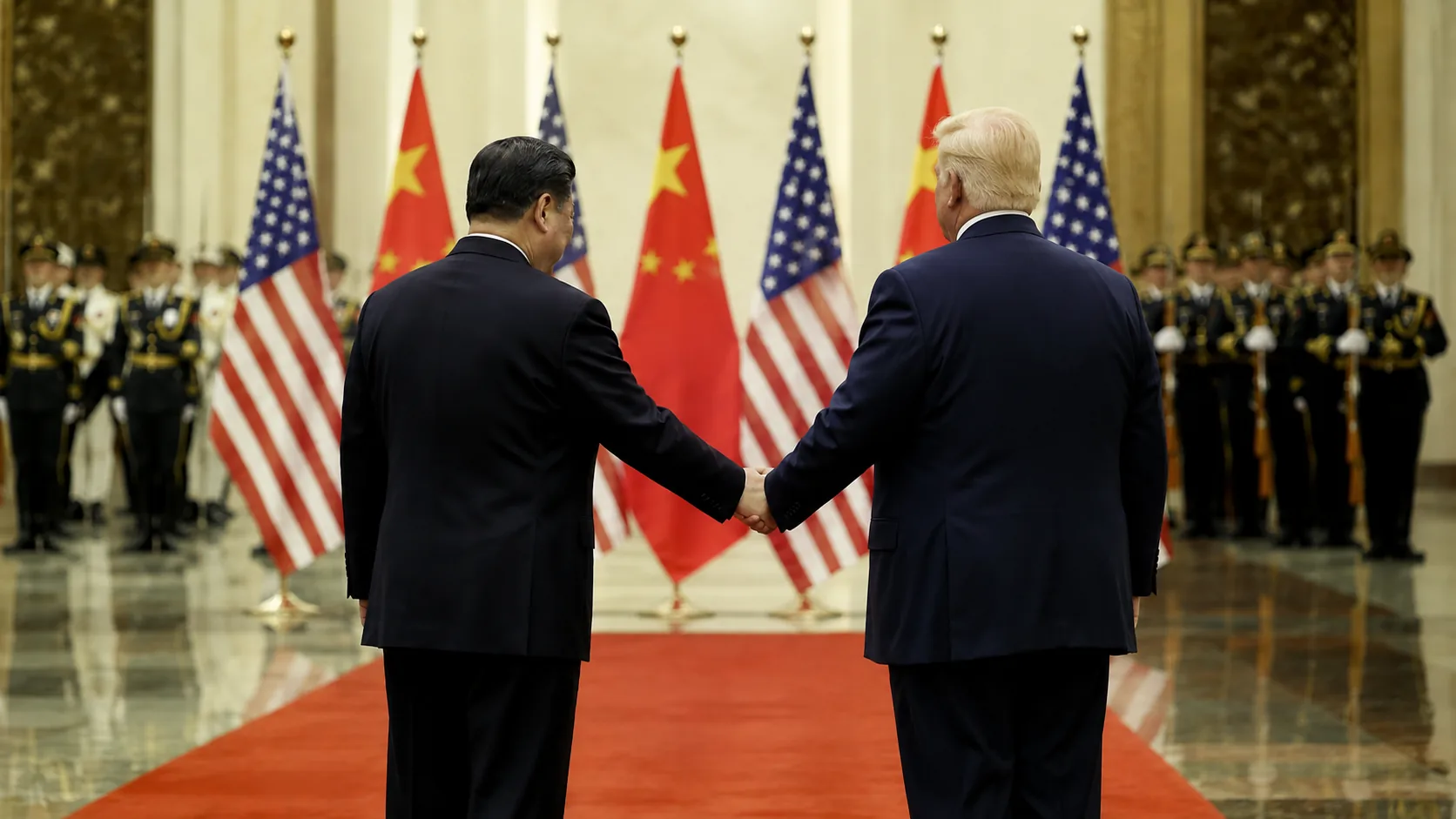
From May 13 to 15, President Trump made a state visit to Beijing — the first sitting U.S. president to do so in nearly a decade, and his second state visit to China overall. The trip had originally been penciled for April and slipped to May because of the Iran war. It was heavy on ceremony and comparatively light on signed deliverables. On trade, Trump said China agreed to buy U.S. oil and roughly 200 Boeing jets — below the 500 the aerospace industry had floated. Beijing also offered a rhetorical commitment to keep the Strait of Hormuz open and a statement that Iran should not obtain nuclear weapons — positions analysts noted cost China, the largest buyer of Iranian oil, very little.
Taiwan was the contested ground. Xi Jinping warned that the two countries “will have clashes and even conflicts” if the Taiwan question is mishandled, and that mishandling it could put “the entire relationship in great jeopardy.” Afterward, Trump told Fox News he was “not looking to have somebody go independent.” He invited Xi to the White House on September 24 — the rematch leg, which keeps the trade conversation alive and open-ended.
“Clashes and even conflicts” — the phrase Xi Jinping used to describe the U.S.–China trajectory if Taiwan is mishandled, in his summit remarks with President Trump, Beijing, May 2026.
Two takeaways for a defense-adjacent small business. First, the Boeing order — even at 200 jets rather than 500 — is a multi-year commercial-aerospace supply-chain signal; if you sit anywhere in the Tier 2–4 aerostructures, fasteners, avionics, or tooling base, that demand pull is real and it shares rate tooling with defense work. Second, the Taiwan language is the planning input that matters. “Clashes and even conflicts” from Xi, paired with a September return summit, tells you the Indo-Pacific deterrence build-out is not slowing down regardless of the Iran drawdown debate. Munitions, undersea, C5ISR, and contested-logistics lines keyed to INDOPACOM are the durable bet. Read this week’s FY27 Navy/Marine Corps posture testimony with the Taiwan timeline in the other hand.
4. The Strait That Stayed Shut: Hormuz at Roughly Zero
While the President was in Beijing, the waterway the whole campaign is nominally about did not move. The Strait of Hormuz remains effectively closed. Before the war, roughly 3,000 vessels a month and about 138 a day transited the strait. Traffic is now at roughly 5% of normal, and since May 6 — when Trump paused Project Freedom “because of great progress” toward a deal — open transits have fallen to near zero per day. Two overlapping blockades are doing the work: Iran’s closure of the strait to foreign shipping, and the U.S. naval blockade of Iranian ports that began April 13. The U.S. blockade was not lifted when Project Freedom paused; CENTCOM says U.S. forces have redirected 62 commercial ships and disabled 4 since it began.
The escalation marker this week: the IRGC Navy announced it had redefined the Strait of Hormuz as a “vast operational area” — language that widens the geography Iran claims as a zone of military control. Pakistan, mediating, said it was hopeful of a breakthrough as Iran reviewed the administration’s latest proposal. Hopeful is not open. As of this writing the strait is, functionally, shut — and a Chinese rhetorical pledge to keep it open, secured in Beijing this week, does not move a single tanker.
This is the line item the news cycle keeps walking past. A strait at 5% of normal throughput, going on three months, is a sustained global-logistics and energy-price stressor that flows straight into your input costs — fuel surcharges, marine war-risk insurance premiums, lead times on anything routed through the Gulf. If you have a fixed-price contract priced before February 28, your margin is being quietly eaten right now, and the longer the strait stays shut the worse the basis gets. Document the cost deltas contemporaneously; if a Request for Equitable Adjustment or an economic-price-adjustment claim is in your future, the evidence you can produce is only as good as the records you keep this month. On the upside: counter-mine, unmanned surface vessel, marine ISR, and escort-sustainment demand is structural now, not episodic.
5. The Long Shutdown Finally Pays Out: DHS Reopens, Defense Hearings Resume
After roughly 92 days — the longest agency shutdown in history — the Department of Homeland Security shutdown ended this week. The House took up an amended DHS appropriations package, H.R. 7147, passed it, and the President signed it. Funding, stability, and pay were restored for the vast majority of the department — TSA, FEMA, the Secret Service, the Coast Guard, and CISA, some 260,000 employees. The carve-out: ICE and Border Patrol funding was deliberately left out and routed to a separate budget reconciliation process, a weeks-long track of its own. The shutdown ended; the fight that caused it did not.
With both chambers back on the floor, FY27 defense appropriations also resumed. The House Appropriations Defense Subcommittee heard Gen. Dan Caine and SecDef Pete Hegseth on the Department of Defense budget, and Adm. Daryl Caudle and Gen. Eric Smith on the Navy and Marine Corps — the posture hearings that set the table for the markup season, and the ones to read against both the Hormuz mine-warfare gap and the Taiwan timeline.
Two clocks just started. First, DHS: with funding restored, the contracting shops at TSA, FEMA, Coast Guard, and CISA will move a backlog of awards that sat frozen for three months. If you hold a DHS IDIQ or have proposals in evaluation, call your contracting officer this week — the obligation surge will be front-loaded and your competitors are dialing the same number. Second, ICE/Border Patrol via reconciliation is a different and slower animal: reconciliation language is written by a handful of committee staff, not appropriators, so if your work touches detention, transportation, or border infrastructure, your engagement target is now the authorizing committees, not the DHS approps subcommittee. And this week’s FY27 Navy/Marine Corps posture testimony is your free scouting report — read it for where the sustainment and shipbuilding dollars are being signaled before the marks drop.
Weekly Awards
🏆 The Dead Heat
Closest finish nobody got to win
The 212–212 House war powers vote. In thoroughbred racing, a dead heat is a celebrated thing — the stewards study the photo, declare two winners, split the purse, and both names go in the record book forever. In the House of Representatives, a 212–212 tie is the opposite of that: the question is simply not agreed to, the measure dies, and the closest result of the entire eleven-week war powers fight produces no winner, no recorded victory, and no change to anything. Three Republicans crossed the aisle. One Democrat crossed back. Two hundred twelve members on each side carried the argument to a perfect standstill — and a perfect standstill, in that chamber, counts as a loss. The race of the year ended in a dead heat, and the rule book threw the photo away.
🌫️ The Fog Machine
Most deliberately confusing play of the week
The administration’s position that the Iran hostilities legally “terminated” on April 7. The argument has now completed its evolution. In April it was Hegseth’s “the 60-day clock pauses or stops in a ceasefire” — a phrase that does not appear in 50 U.S.C. § 1544. This week it became a formal claim, conveyed in a presidential letter to Congress, that there has been no exchange of fire since April 7 and that the hostilities which began February 28 have terminated — so there is no clock to certify, because there is nothing to certify it against. The strait is closed. The blockade is in force. CENTCOM has disabled four ships and redirected sixty-two. SecDef Hegseth told lawmakers airstrikes could resume without Congress. Sen. Merkley’s floor answer — “both sides are engaged in a daily war” — is not rhetoric; it is the simpler reading of the facts. The fog is the claim that an operation this large is, legally, not happening at all.
ICYMI
- Trump invited Xi Jinping to the White House on September 24, announced at the Beijing state dinner — the rematch leg that keeps the trade negotiation open past this week.
- The China trade headline: Beijing agreed to buy U.S. oil and roughly 200 Boeing jets. The aerospace industry had discussed a figure closer to 500. Analysts called the visit big on pageantry and short on signed agreements.
- Xi’s Taiwan warning — “clashes and even conflicts” — was the contested moment of the summit. Trump told Fox News afterward he is “not looking to have somebody go independent.”
- The IRGC Navy redefined the Strait of Hormuz as a “vast operational area,” widening the zone Iran claims as one of military control. Open transits have been near zero since May 6.
- CENTCOM reports U.S. forces have redirected 62 commercial ships and disabled 4 since the naval blockade of Iranian ports began April 13. The blockade was not lifted when Project Freedom was paused.
- Golden Tempo will skip the Preakness and point to the Belmont. Trainer Cherie DeVaux announced May 6 that the Kentucky Derby winner would not make the trip — the second straight Derby winner to pass on a Triple Crown bid, reviving the debate over the Triple Crown calendar.
- Brittany Russell’s Taj Mahal — the bid to become the first woman to train a Preakness winner, two weeks after Cherie DeVaux did it at the Derby — led most of the race and faded in the stretch. Her husband Sheldon Russell rode.
- S. Res. 526, a resolution to withhold the pay of Senators during a government shutdown, was on the floor as the DHS shutdown wound down. The Senate also adopted a resolution honoring the late former Sen. Dirk Kempthorne (R-ID).
- Napoleon Solo’s winning connections — trainer Chad Summers, jockey Paco Lopez — each won their first Preakness. Owner Al Gold drew a separate headline by apologizing to NBC Sports reporter Britney Eurton for a winners’-circle comment he called “nasty.”
The Briefcase
This week's chaos level: THE FAVORITE LED THE WHOLE WAY AND GOT CAUGHT AT THE WIRE, AND THE RACE OF THE YEAR ENDED IN A DEAD HEAT WITH ITSELF
The week ran a mile-and-three-sixteenths classic (the 7th Iran war powers vote), a dead-heat photo finish (the House 212–212), a stakes closeout (Warsh), a breakaway in a foreign post parade (Beijing), and a long-shot maiden that finally broke through after 92 days (the DHS shutdown). The favorites mostly held. The one race everyone will remember — the war powers fight — was lost by a single Pennsylvania vote and tied in the other chamber. Pour the Sagamore. Read the FY27 Navy/Marine Corps testimony before Monday. Set your SAM.gov filters for the DHS obligation surge. The Senate’s next war powers vote is one defection from a different result. Until then, the floor belongs to whoever’s running alone.
Your Turn
The Senate’s 7th Iran war powers resolution failed by one vote. The House tied. Warsh is in. Trump is back from Beijing. Which of these happens FIRST?
A) An 8th Iran war powers resolution reaches the Senate floor — and a single additional defection finally carries it
B) John Fetterman (D-PA) votes yes on an Iran war powers resolution for the first time
C) A preliminary U.S.–Iran deal is announced and the Strait of Hormuz reopens to commercial traffic
D) Congress completes the ICE/Border Patrol reconciliation track left out of the DHS deal
E) Golden Tempo wins the Belmont and the “fix the Triple Crown calendar” debate gets a hearing
Hit reply and tell us. Best answers featured next week. (The smart money is on A — the margin is now genuinely one seat. B is the same bet wearing a different saddlecloth, and Fetterman has not blinked in seven tries. C is the value play because both sides have sunk real cost into the Pakistani channel. D is real but slow — reconciliation is a weeks-long track by design. E is the longshot, but a Derby winner just skipped the Preakness, so the calendar argument has legs.)

Source presentation is carried in the article body where applicable. Reported facts and analytic judgment are kept distinct.