
Both chambers were on the bench all week. The executive branch ran the floor: Project Freedom (a 40-nation Strait of Hormuz operation), a CIA leak that Iran can outlast the blockade for months, and the Kevin Warsh Fed Chair vote teed up for Monday with Fetterman signaling YES. Powell’s term ends May 15. NBA Conference Semifinals as the lens.

- Both chambers in recess. Senate held only pro forma sessions (Thursday, May 7). House returns Tuesday, May 12 at noon. Substantive floor action was off the calendar all week.
- SecDef Hegseth announced Project Freedom — a 40-nation Strait of Hormuz operation, “defensive in nature, focused in scope and temporary in duration.” Hegseth: “a powerful red, white and blue dome over the strait.” Germany’s minesweeper Fulda left Kiel May 4 to join.
- Trump told reporters War Powers authorization is “unconstitutional” and falsely claimed prior presidents had not sought it. The 60-day clock from his March 2 Iran notification expired May 1; no written certification under 50 U.S.C. § 1544(b) has been filed.
- Tuesday: Trump paused the operation to negotiate, full blockade remaining in force. Wednesday: Trump threatened escalation — bombing at “a much higher level and intensity than before” if Iran refuses U.S. terms.
- Washington Post reported a CIA assessment (May 7) finding Iran retains a substantial missile and drone arsenal and can outlast Trump’s blockade for months. The assessment was delivered to the White House this week.
- Witkoff and Kushner are leading negotiations through Pakistani mediators. A preliminary deal starts a 30-day clock for a full agreement — lifting U.S. sanctions, releasing frozen Iranian funds, certain nuclear curbs.
- Warsh confirmation vote teed up for week of May 11. Sen. John Fetterman (D-PA) has signaled he will vote YES. Final vote requires simple majority (R’s hold 53). 30 hours of post-cloture debate apply because the Fed Chair is a Level I Executive Schedule position.
- Powell’s term as Chair ends May 15. He will serve as Chair pro tem until a successor is confirmed. DHS shutdown enters day 85; the bipartisan Senate-passed H.R. 7147 still sits untouched on the House calendar.
The 2026 NBA Conference Semifinals are running four series this week and three of them are over. Both No. 1 seeds are up 3-0. The Oklahoma City Thunder, the team built like a Pentagon five-year plan, are 7-0 in this postseason and have not been pushed to a fourth quarter that mattered. The New York Knicks have done the same to the Philadelphia 76ers. The only series with actual basketball in it is San Antonio vs. Minnesota, where a twenty-two-year-old, seven-foot-four French center named Victor Wembanyama is blocking shots without committing fouls, which the NBA rule book technically forbids most other humans from possessing.
Washington this week ran the same play. The chalk on offense, no defense.
Both chambers of Congress were in recess. The Senate held one pro forma session on Thursday. The House held none. There were no floor votes, no committee markups in the regular sense, no roll-call hearings. The body that under 50 U.S.C. § 1544(b) is supposed to constrain the executive’s use of force was, for the entire calendar week, on the bench. Meanwhile, on a podium in front of the White House on Monday, Secretary of Defense Pete Hegseth announced Project Freedom — a new, “defensive” military operation in the Strait of Hormuz involving more than forty nations and what Hegseth called “a powerful red, white and blue dome.” A German minesweeper named Fulda left the port of Kiel on Monday morning to join. The French defense ministry put out a statement. On Tuesday, the President paused the operation to negotiate. On Wednesday, he threatened to escalate it if Iran refused the deal. By Thursday, when the Washington Post reported that a confidential CIA assessment had concluded Iran can outlast the U.S. blockade for months, the White House was already saying the leaker would be found.
On Thursday morning, the President was asked on the South Lawn whether he intended to seek War Powers Resolution authorization from Congress. He replied that he considered such authorization “unconstitutional” and falsely claimed other presidents had not sought it. The 60-day clock from his March 2 Iran notification expired May 1. No written certification under subsection (b) has been filed. The campaign continues on the legal theory that one cabinet secretary said one sentence at one hearing on April 30.
And on Monday, the Senate returns. Kevin Warsh’s confirmation as Chair of the Federal Reserve is teed up for the week of May 11 — a confirmation vote that will be entitled to up to thirty hours of post-cloture debate because the Fed Chair is a Level I Executive Schedule position. Powell’s term ends May 15. Sen. John Fetterman (D-PA), who has voted no on every Iran war powers resolution since the campaign began, has signaled he will vote yes on Warsh. Fetterman is the only Democrat who keeps doing this. The Democratic caucus has decided to find it endearing.
Pads on. Bench in. The whistle is in the ref’s pocket.
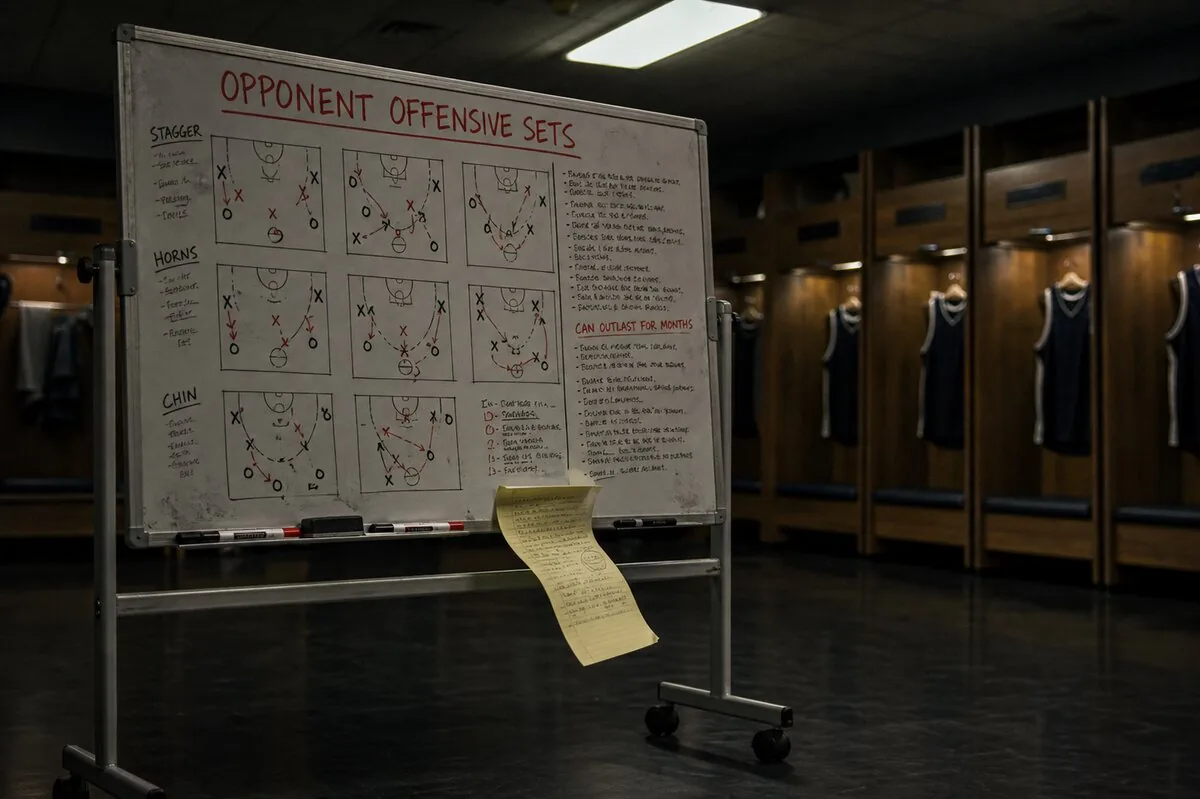
Xs & Os: The Bracket Card — Recess Week
Four series on the Washington card this week. Three of them ran without Congress on the floor. The fourth tips Monday at 3:00 p.m. when the Senate returns.
| Pos | Player | Notes |
|---|---|---|
| WIN | SecDef Pete Hegseth | Monday podium: “powerful red, white and blue dome over the strait,” “24/7 overwatch for peaceful commercial vessels” |
| PLACE | French Defense Ministry | Coalition described as “more than forty nations,” “distinct from the military operations initiated in the region” |
| SHOW | Germany / FGS Fulda | Bundeswehr minesweeper departed Kiel Monday, May 4, to position for joining when the operation launches |
| ALSO RAN | Sec. Rubio | Said February combat operations “had concluded”; Project Freedom is “first step” toward reopening the strait |
| SCRATCHED | The U.S. Congress | In recess. No vote, no hearing, no statement of disapproval. Nothing. |
| Field | Detail |
|---|---|
| WIN | Kevin Warsh, expected confirmation by simple majority (R’s 53) |
| BUZZER-BEATER | Sen. John Fetterman (D-PA) has signaled YES — the only D vote on the table |
| OVERTIME | 30 hours of post-cloture debate available (Fed Chair = Level I Executive Schedule, excluded from 2019 2-hour rule) |
| FALLBACK | Powell serves as Chair pro tem if not confirmed by May 15 — standard statutory mechanism |
| Field | Detail |
|---|---|
| WIN | The Washington Post, May 7 byline |
| BOTTOM LINE | Iran “can outlast Trump’s blockade for months,” retains substantial missile and drone arsenals |
| DELIVERED | To the White House this week, prior to the public coverage |
| WHITE HOUSE | Said the leaker would be found |
| Field | Detail |
|---|---|
| WIN | Steve Witkoff (Trump envoy) and Jared Kushner |
| VENUE | Through Pakistani mediators |
| STRUCTURE | Preliminary deal → starts 30-day clock for full agreement: lift U.S. sanctions, release frozen Iranian funds, curbs on enrichment |
| UN | U.S. + Bahrain/Saudi/UAE/Kuwait/Qatar drafted Security Council resolution requiring Iran to “cease attacks, mining, and tolling” |
| ISRAEL | Netanyahu: “I speak with Trump almost on a daily basis… full coordination, no surprises” |
The scoring play of the week: Trump telling reporters that War Powers Resolution authorization is “unconstitutional.” In basketball this is called “running the inbound when nobody’s on the floor.” In statutory interpretation it is called “Article II as a TED Talk.”
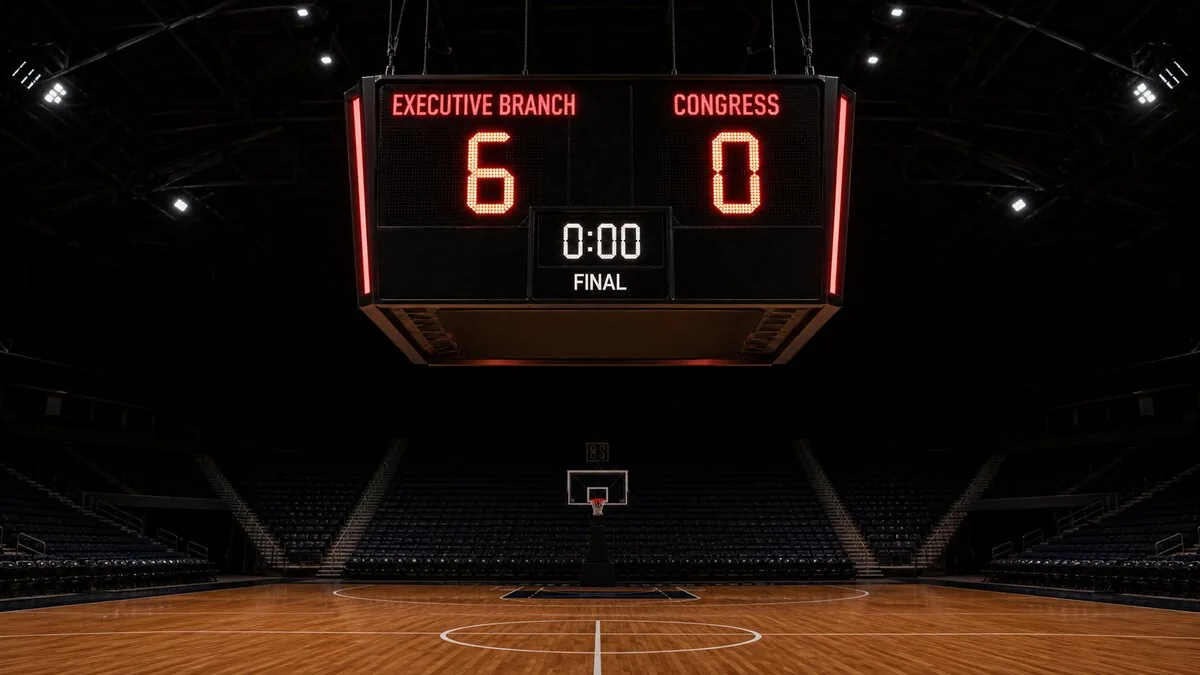
| Team | Record | Trend |
|---|---|---|
| Executive Branch on War Powers | 6–0, plus one no-call (May 1 clock expiry) | Championship form |
| Congress (collectively) | 0–6, plus zero pickups during recess | On the bench |
| DHS contractors | Day 85, no funding | Indefinitely scratched |
| Iran (per CIA assessment) | Missile and drone inventory: substantial; blockade endurance: months | Holding |
| 40-nation Hormuz coalition | Stood up Monday, paused Tuesday, threatened to escalate Wednesday | Variance: high |
The Big Five
1. Project Freedom: The Fast Break the Bench Never Saw
On Monday, May 4, in the morning press briefing at the White House, Secretary of Defense Pete Hegseth announced Project Freedom — described as a new, defensive military operation in the Strait of Hormuz, “separate and distinct” from the ongoing Iran air campaign that began on March 2. “Project Freedom is defensive in nature, focused in scope and temporary in duration, with one mission: Protecting innocent commercial shipping from Iranian aggression,” Hegseth said. “We have established a powerful red, white and blue dome over the strait. American destroyers are on stations supported by hundreds of fighter jets, helicopters, drones and surveillance aircraft, providing 24/7 overwatch for peaceful commercial vessels.” Secretary of State Marco Rubio called it the “first step” toward fully reopening the waterway, and said the February combat operations “had concluded.”
The French defense ministry put out a statement the same day saying the operation “brings together more than forty nations” and is “distinct from the military operations initiated in the region.” The German Bundeswehr’s minesweeping vessel Fulda was photographed leaving Kiel that Monday morning, redeploying to the Mediterranean to be in position to join when the operation launches.
By Tuesday night, Trump had hit the brakes. The President announced he was pausing the U.S. effort to escort commercial shipping through the strait while the full naval blockade remained in force pending negotiations. By Wednesday, he had reversed again, telling reporters that if Iran did not agree to U.S. terms, bombing would continue at “a much higher level and intensity than it was before.”
If you are a sub-tier defense supplier with anything in the Strait of Hormuz / minesweeping / unmanned surface vessel / aerial-overwatch / counter-mine value chain, this is the most important defense announcement of the calendar year for your sector. A 40-nation coalition operation requires interoperability work the U.S. DoD has been talking about since at least 2018 and will now have to actually fund. The follow-on supplemental request that Chairman Calvert flagged at the FY27 Air Force / Space Force budget hearing on April 30 is going to swallow a lot of this. If you have a SAM.gov filter set up for “Operation Epic Fury,” add “Project Freedom,” “Strait of Hormuz,” and the relevant NAICS codes (336612, 541330, 541715, 561621) today. If you have an in-place IDIQ in the Fifth Fleet AOR, call your KO Monday morning before your competitor does.
2. The Closeout: Warsh’s Confirmation Vote, Fetterman’s Crossover

The Senate returns from recess Monday, May 11, at 3:00 p.m. The Kevin Warsh confirmation vote — to Chair the Federal Reserve Board of Governors and to fill a 14-year term as a Member of the Board — is teed up for the week of May 11. Banking Committee discharged him on April 29 by a 13–11 strict party-line vote — the first fully partisan committee vote on a Fed Chair nominee in the committee’s history. Majority Leader Thune filed cloture on April 30.
Two procedural points worth knowing. First, the Fed Chair is a Level I Executive Schedule position — the same tier as Cabinet secretaries. A 2019 Senate precedent change cut post-cloture debate to two hours for most executive nominees but explicitly excluded Level I positions. So Warsh’s confirmation is entitled to up to 30 hours of post-cloture debate. Senate Democrats have signaled they will use every minute, which means the actual confirmation vote occurs late in the week of May 11, not on Monday.
Second, the headline crossover: Sen. John Fetterman (D-PA) has signaled to Semafor that he will vote yes on Warsh. Fetterman has been the only Democrat voting no on every Iran war powers resolution since March, the only Democrat voting yes on the $70B DHS/ICE reconciliation budget, and is now the only Democrat signaling yes on Warsh. The Democratic caucus, which has by now exhausted its options for pretending this is a fluke, has decided to find it endearing. The Pennsylvania general is in 2028.
The fallback: If Warsh is not confirmed before Powell’s term ends May 15, Powell stays. Powell at the March Fed meeting: “If my successor is not confirmed by the time my term ends, I will serve as Chair pro tem until my successor is confirmed. That is what the law calls for, that’s what we’ve done on several occasions — including involving me — and that’s what we’re going to do in this situation.” There is no Fed Chair gap. There is potentially a 30-hour Senate floor debate, during which the markets will price the variance.
“If my successor is not confirmed by the time my term ends, I will serve as Chair pro tem until my successor is confirmed. That is what the law calls for, that’s what we’ve done on several occasions — including involving me — and that’s what we’re going to do in this situation.” — Chair Jerome Powell, March 2026 FOMC press conference
Same as last week, but with a date. The Fed Chair transition is structurally smooth (pro tem mechanism), but the variance around policy expectations is wider than it would be if Warsh had been confirmed bipartisanly. If you have a Q3 capital purchase, get the financing locked this week, not next. Rates won’t move on the confirmation vote itself; they will move on the first Warsh press conference, which historically occurs at the FOMC meeting after the new Chair’s installation. June 17–18 is the next FOMC.
3. The Clock That Already Ran Out: Trump Calls War Powers “Unconstitutional”

The 60-day War Powers Resolution clock from Trump’s March 2 Iran notification expired Friday, May 1, at midnight. The statute, 50 U.S.C. § 1544(b), requires the President to either (a) terminate the introduction of armed forces into hostilities, or (b) file a written certification of “unavoidable military necessity respecting the safety of United States Armed Forces” that buys an additional 30 days. As of the morning of May 10, no such written certification has been filed.
This week the President was asked about it on the South Lawn. He said he considered the requirement “unconstitutional” and falsely claimed prior presidents had not sought such authorization. (They have. Bush 41 in the 1991 Gulf, Bush 43 in 2001 AUMF and 2002 Iraq AUMF, Obama in 2014 ISIL AUMF, Trump himself in earlier strike notifications under the same statute.) On April 30, before the Senate Armed Services Committee, Hegseth had dismissed the 60-day threshold: “I would defer to the White House and White House counsel on that. However, we are in a ceasefire right now, which, our understanding, means the 60-day clock pauses or stops in a ceasefire.” That phrase — “pauses or stops in a ceasefire” — does not appear in the statute. The Senate this week was on recess. There is no formal congressional response on the record.
“The 60-day clock pauses or stops in a ceasefire.” — SecDef Pete Hegseth, Senate Armed Services Committee testimony, April 30, 2026. (The word “ceasefire” does not appear in 50 U.S.C. § 1544.)
This is a sentence away from being a Supreme Court case. If any plaintiff with standing — a service member, a deployed unit’s family member, a member of Congress under Raines-distinguished theory — brings a §1544 enforcement suit, the legal cloud over the operation expands. If your prime contract has a force-majeure clause that turns on the legal status of U.S. operations, ask your contracts counsel where you stand on a hypothetical injunction. Not because one is likely. Because the cost of finding out at the wrong moment is your option year.
4. The Leaked Scouting Report: CIA Says Iran Can Outlast the Blockade for Months
On Thursday, May 7, the Washington Post reported on a confidential intelligence community assessment delivered to the White House this week. The assessment’s top-line finding: Iran retains a substantial missile and drone arsenal, and can outlast Trump’s blockade for months. This contradicts the public-facing administration framing — that the campaign and the blockade have materially degraded Iran’s offensive capability and that the “ceasefire” is producing strategic patience on the U.S. side and capitulation pressure on the Iranian side.
The administration response was twofold. First, the White House said the leaker would be found. Second, on Wednesday, before the assessment landed in print, Trump had already signaled progress in the Witkoff-Kushner channel: “The war will be over quickly.” The leaked assessment lands at the moment the U.S. negotiating posture asks Iran to accept a preliminary deal in roughly the next thirty days. That posture is harder to sell at home if the IC is on record saying the leverage is overstated.
Sustainment demand. If the CIA assessment is correct — and the IC has been correct on Iran-arsenal questions more often than the political layer has — then the operations tempo of Project Freedom and Operation Epic Fury runs for months, not weeks. Translation: the Weapons System Sustainment ask of $24.8B that HAC-D heard last week is a floor, not a ceiling. If you have any A-10/B-1/B-52/F-15E sustainment, depot-overhaul, or munitions-replenishment capability, this is the cycle. Same goes for unmanned surface vessel sustainment, mine warfare consumables, and ISR airframe overhaul.
5. The Bench: Both Chambers in Recess, Nothing Moves on the Things That Were Moving
Both chambers of Congress were on a district / state work period this week. The Senate gaveled in at 10:00 a.m. for a single pro forma session on Thursday, May 7, and adjourned. The House held no floor votes; per the House Press Gallery, the next recorded votes are expected Tuesday, May 12. There was one substantive committee activity on the calendar — a House Education and Workforce field hearing at Vincennes University’s Gibson County Center for Advanced Manufacturing and Logistics in Fort Branch, Indiana, titled “Protecting Workers and Powering America: The Future of Mining.” Critical-minerals and rare-earth language, in front of Hoosier audiences, during recess, in a presidential pre-primary state. The geography was the policy.
Everything else that was teed up last week sat. S. 874 (Expanding Whistleblower Protections for Contractors Act) — passed Senate by UC April 29, traveled to House, has not moved. FY27 Air Force/Space Force budget — HAC-D heard the witnesses April 30, no markup posted. FY27 National Security/State markup — held April 28, no public report. H.R. 7147 (the bipartisan Senate-passed DHS funding bill) still sits on the House calendar untouched on day 85 of the DHS shutdown. The Cherfilus-McCormick (D-FL) seat in Florida’s 20th is still vacant. The Mills (R-FL) expulsion calls are still on the back burner.
Recess is when small contractors usually catch up on the things that get drowned out during session weeks. Three things to do this week. (1) Update your DSBS profile if you haven’t since Q1; the FPDS upload runs the first week of every month. (2) If you have a teaming agreement in negotiation with a prime on an FY27 DoD or NASA workload, get the indemnification language reviewed against the new S. 874 whistleblower protections before the House moves it. (3) If you are anywhere near the critical-minerals / mining / industrial-base value chain, watch the Education and Workforce field hearing transcript when it’s released — Indiana 8th district is where this conversation is being staged for the 2028 cycle.
Weekly Awards
🏆 The Yellow Card
Most expensive sentence into a microphone of the week
“A powerful red, white and blue dome over the strait.” Pete Hegseth, podium, Monday morning. A 40-nation maritime operation, with German minesweepers, French naval staff, and Gulf Cooperation Council co-signatories, announced as the “red, white and blue dome.” The dome metaphor is borrowed from Israel’s Iron Dome — a tactical air-defense system — and applied to commercial shipping protection in international waters. The branding is for domestic consumption. The operation, on the operational facts, is a defensive escort posture supported by the coalition partners doing most of the mine-warfare work the U.S. Navy has under-invested in for fifteen years. The branding will not survive the second French press briefing. The operation might.
🌫️ The Fog Machine
Most deliberately confusing play of the week
The President of the United States telling reporters that War Powers Resolution authorization is “unconstitutional.” This is a creative reading of Article I, Article II, and the past 51 years of executive practice under the War Powers Resolution. The statute itself has never been ruled unconstitutional. Every modern president has complied with its notification requirements while disputing its substantive constraint. The novel position here is not the disputation — that has been the executive view since Nixon — but the public assertion, with reporters present, that compliance with subsection (b) is itself the constitutional violation. Combined with Hegseth’s “the clock pauses or stops in a ceasefire” line from the previous Thursday, the administration has now placed two non-statutory phrases into the official record as the basis for continuing operations past the May 1 expiry. Both are unreviewed by any court. Both will eventually be.
ICYMI
- Macron called Iranian President Masoud Pezeshkian on Wednesday and told him the attacks on Emirati civilian infrastructure and ships near the Strait of Hormuz were “unjustified.” Macron also called on both the U.S. and Iran to lift their respective shipping restrictions “without any conditions.” This is the first publicly reported direct head-of-state contact between Paris and Tehran since the campaign began.
- Netanyahu, on a taped Wednesday message: “I speak with Trump almost on a daily basis. We have full coordination, there are no surprises. We share common goals, and the most important goal is to remove the enriched material from Iran, all the enriched material, and dismantle Iran’s enrichment capabilities.” The Israeli position on the negotiated curbs is therefore not “limit enrichment” but “remove enrichment.” That gap is the gap.
- UN Security Council draft resolution circulated by the U.S. with Bahrain, Saudi Arabia, the UAE, Kuwait, and Qatar would require Iran to “cease attacks, mining, and tolling.” Rubio called it “a real test for the UN.”
- Germany’s minesweeper FGS Fulda left Kiel Monday morning, May 4, redeploying to the Mediterranean for staging.
- House Education and Workforce field hearing on “Protecting Workers and Powering America: The Future of Mining” held at Vincennes University’s Gibson County Center for Advanced Manufacturing and Logistics, Fort Branch, Indiana, Friday at 9:15 a.m. local. Critical minerals / rare-earth content, Indiana 8th congressional district, pre-2028 cycle staging.
- Witkoff & Kushner reported by Reuters to be running the Pakistani-mediated negotiations. Preliminary deal would start a 30-day clock to a full agreement covering sanctions relief, frozen-asset release, and certain nuclear curbs.
- The Confidential CIA Assessment on Iran’s blockade endurance was the lead Washington Post national-security story Thursday, May 7. White House said the leaker would be found.
- Senate adjourned after Thursday’s pro forma. Reconvenes Monday, May 11 at 3:00 p.m. Warsh confirmation vote teed up for the week.
- NBA Conference Semifinals — Thunder lead Lakers 3-0 (OKC 7-0 in the postseason), Knicks lead 76ers 3-0, Spurs lead Wolves 2-1 (Wembanyama just won DPOY), Pistons lead Cavs 2-1. The chalk is winning. The cameras have moved to the referees, which is Washington’s play this week as well.
The Briefcase
This week's chaos level: BOTH No. 1 SEEDS UP 3-0, THE BENCH IS EMPTY, AND THE FAST BREAK IS RUNNING THROUGH THE STRAIT OF HORMUZ
Recess weeks are quiet on the surface and busy underneath. Project Freedom was announced into an empty arena. The CIA assessment leaked into a White House paying attention to other things. The Warsh confirmation vote is teed up for a body that has not been on the floor in seven days and will be expected to spend thirty hours of post-cloture debate by Friday. Pour the Larceny. Read the WaPo CIA story before Monday. Set your filters for “Project Freedom” on SAM.gov. The Senate returns Monday at 3 p.m. The whistle goes back in the ref’s hand. Until then, the floor belongs to whoever’s on it.
Your Turn
The Senate reconvenes Monday, May 11. Powell’s term ends May 15. The 60-day clock has been expired for 9 days. Which of these happens FIRST?
A) Kevin Warsh is confirmed as Fed Chair on a near-party-line floor vote (with Fetterman)
B) The President files a written 30-day “unavoidable military necessity” certification under 50 U.S.C. § 1544(b)
C) A preliminary U.S.–Iran deal is announced through the Witkoff/Kushner channel
D) The House passes the bipartisan Senate-passed DHS funding bill (H.R. 7147) on day 90+ of the shutdown
E) The CIA leaker is identified by name
Hit reply and tell us. Best answers featured next week. (The smart money is on A. B has been the obvious move for 9 days and still has not happened. C is the value bet because both sides have already paid sunk costs into the channel. D is dead. E is the longshot, but leakers in this White House have a poor batting average for staying anonymous.)
Source presentation is carried in the article body where applicable. Reported facts and analytic judgment are kept distinct.