
On Thursday, the United States Senate held a 28-second voice vote on a national emergency. No debate. No quorum check. No record of who was in the room. Welcome to the modern upper chamber.

Congress is in recess. The DHS partial shutdown — now 57 days, the longest in U.S. history — grinds on because the House and Senate can’t agree on ICE/CBP funding. President Trump threatened Iran on Truth Social, a ceasefire was agreed and violated, and Vance/Kushner flew to Islamabad for peace talks. The Selective Service published automatic draft registration for all men 18–26 by December. Melania Trump blindsided the White House with an Epstein statement. Tariff rates remain at 145% on China after the SCOTUS IEEPA ruling. The Senate met for 28 seconds on Tuesday. Happy spring.
You know that scene in Ferris Bueller where Ben Stein calls roll to an empty classroom? “Bueller… Bueller…” That was the United States Senate this week. They gaveled in, conducted 28 seconds of official business, and gaveled out. Twenty-eight seconds. Meanwhile, outside the building: an active shooting war with Iran, the longest government shutdown in American history, automatic draft registration for your 18-year-old, and tariff rates that change more often than a teenager’s Instagram bio. But sure — take two weeks off. The republic can wait.

Xs & Os: Augusta, the Draft & the Launchpad
April means the Masters, the NFL Draft, and — because why not — Artemis. Three lenses for three kinds of legislative action: the long game, the fresh picks, and the moonshots.
| Bill / Issue | Lie | Score |
|---|---|---|
| DHS Funding | Buried in a bunker between chambers. Congress on recess, no movement. | Bogey (+1) |
| Tariff Transparency Act (S.959) | Sitting pretty on the fairway. 24-state lawsuit adds tailwind. | Par |
| War Powers Resolution | Stuck behind a tree named Johnson. Speaker refused to cut recess. | Double Bogey (+2) |
Rory McIlroy missed 40% of fairways at Augusta this week and still made the cut. Trump’s Truth Social post about “a whole civilization” dying tonight missed the diplomatic fairway by a wider margin — and unlike Rory, there’s no scrambling from the rough when you’re threatening a sovereign nation between rounds of golf. At least McIlroy knows where the clubhouse is. Congress hasn’t found it since February.
| Pick | Prospect | Scouting Report |
|---|---|---|
| 1st Round | Automatic Draft Registration (NDAA rule) | Already published, 45 orgs protesting. This one’s getting drafted whether the fans like it or not. |
| 2nd Round | Epstein Congressional Hearings | Melania forced the conversation. Bipartisan interest from Garcia (D) and Mace (R). Combine measurables look good — but will the GM (Comer) actually make the pick? |
| Undrafted FA | The 36 Pro Forma Bills | Including National Pickleball Month. These are the guys who show up to camp, run a 5.2 forty, and get cut before the first preseason game. |
Mission Control: The Artemis Report
DHS Shutdown Resolution: This mission has scrubbed 57 times. The crew (federal employees) is still strapped in, burning oxygen, waiting for someone in Houston to give the go. Back pay finally started hitting accounts Friday — the equivalent of tossing granola bars into the capsule while the launch keeps slipping.
Iran War Powers Vote: The ultimate Artemis parallel. Congress is supposed to authorize the mission before the rocket launches, not after it’s already in orbit. Right now we’ve got astronauts in space and mission control on vacation.
Tariff Reform (S.959): The deep-space probe. It’s pointed in the right direction, it has the right instruments, but nobody expects it to reach its destination this fiscal year. Still — you aim for the moon because the alternative is aiming for nothing.
The Big Five
1. Iran: Congress Goes to War Without Going to Work
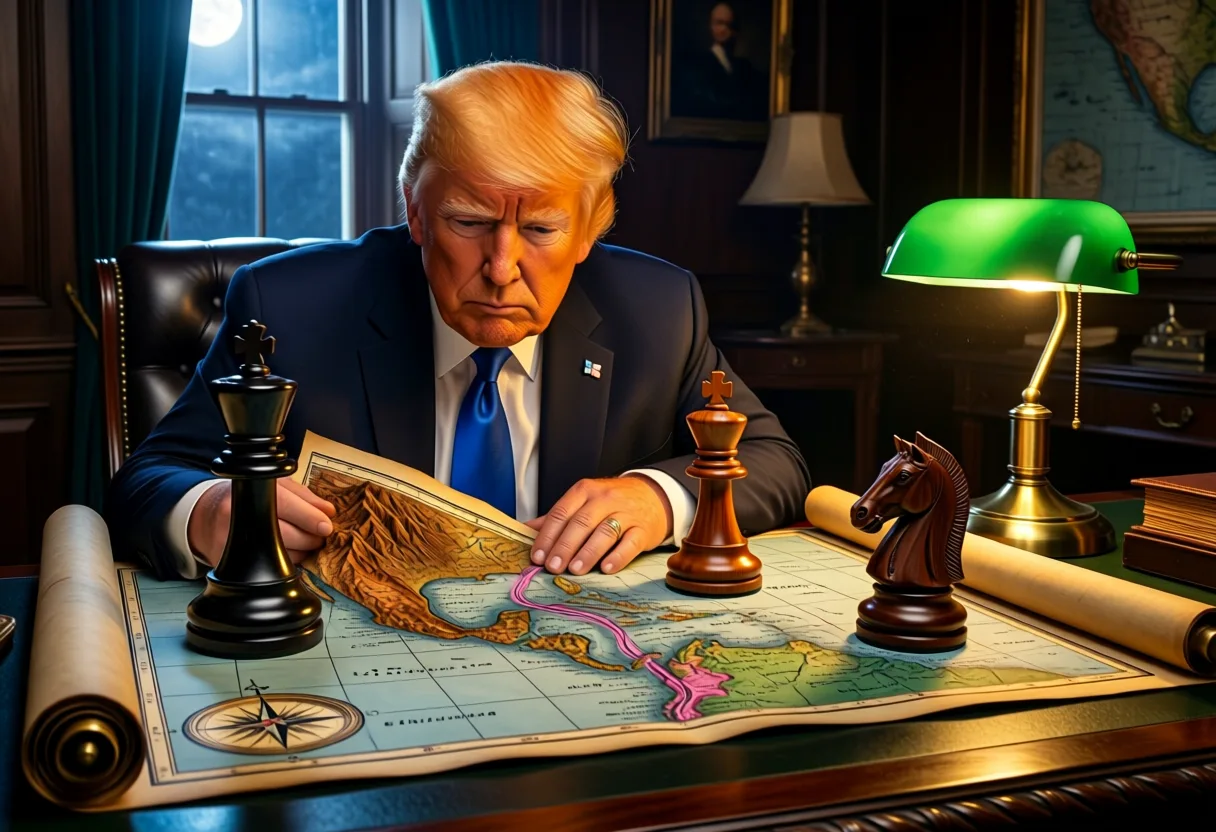
President Trump posted on Truth Social Monday that “a whole civilization will die tonight” unless Iran reopened the Strait of Hormuz. Congressional Democrats demanded Speaker Johnson cut recess short for a war powers vote. He declined. Even Republicans broke ranks: Marjorie Taylor Greene called for Trump’s removal over the escalation, Sen. Collins said ground troops require congressional authorization, and Sen. Curtis won’t support action beyond 60 days without approval.
A ceasefire was agreed April 8 but has been violated by both sides. VP Vance, envoy Witkoff, and Jared Kushner traveled to Islamabad for peace talks Friday.
“Gas prices have already cost American households an estimated $92 extra. Farmers face $131 million in added fertilizer costs. Defense contractors should start watching supplemental spending debates very carefully.”
If you’re a small business eating fuel surcharges and watching supply chain disruptions stack up — your elected representatives are on vacation.
2. DHS Shutdown Hits Day 57 — Longest in U.S. History
The Department of Homeland Security shutdown that began February 14 is now the longest government shutdown in American history, and Congress left for a two-week Easter/Passover recess without resolving it.
The House and Senate GOP are running rival funding plans: the Senate passed a bill reopening most of DHS minus ICE/CBP; House conservatives rejected it. Speaker Johnson called the Senate deal “a joke.” TSA callout rates now exceed 40% at multiple airports. Nearly 500 TSA officers have quit. DHS back pay finally started hitting accounts around April 10 — cold comfort for the bills that came due in February.
If you’re a government contractor or small business that touches DHS — FEMA grants, CISA cybersecurity programs, Coast Guard contracts — your invoices are collecting dust. Airport chaos means delayed shipments and missed meetings for every traveling business owner. Nobody’s answering the phone at the agencies you need.
3. The First Lady Goes Freelance
In a move that blindsided the West Wing, First Lady Melania Trump delivered a surprise six-minute livestreamed statement from the White House Wednesday, denying ties to Jeffrey Epstein and calling on Congress to hold public hearings for survivors. President Trump said he didn’t know she was going to do it.
The statement came one day after DOJ said former AG Pam Bondi would not appear for an April 14 House Oversight subpoena on Epstein documents. Bipartisan support followed: Rep. Robert Garcia (D-CA) called on Chairman Comer to schedule hearings; Rep. Nancy Mace (R-SC) praised the First Lady.
None, unless you count the entertainment value. The First Lady freelancing on Epstein while the West Wing runs an Iran war is the kind of chaos that makes you glad you’re running a business instead of a country.
4. Uncle Sam Wants You (Automatically)
The Selective Service System published a proposed rule implementing the NDAA provision requiring automatic draft registration for all male citizens aged 18–26 by December 2026. The old system relied on voluntary compliance with an 81% compliance rate in 2024, declining. White House press secretary Karoline Leavitt said Trump “keeps his options on the table” when asked about a draft in the context of the Iran war.
A coalition of 45 organizations opposes the measure.
Veterans in this audience know exactly what Selective Service means. If you employ young men, they’re about to be auto-enrolled. The “keeps his options on the table” quote during an active shooting war is the kind of thing that makes parents — and employers — sit up straight.
5. Tariff Whiplash: Now on Section 122
After the Supreme Court ruled in February that IEEPA doesn’t authorize tariffs, the administration pivoted to Section 122 of the Trade Act, which caps tariffs at 15% for 150 days. Twenty-four states have sued to block the new tariffs. Current rates remain staggering: 145% on China, 10% baseline, and up to 50% for some countries.
Texas small businesses alone paid $26 billion in tariffs between March 2025 and January 2026. The bipartisan Tariff Transparency Act (S.959) is worth watching — it would require the executive to publish economic impact assessments before imposing tariffs.
This is THE story for anyone who imports materials, components, or finished goods. Planning is impossible when tariff rates swing based on court rulings, executive orders, and a 150-day legal clock. If you haven’t called your senators about S.959, now’s the time.
The Weekly Awards
🏆 The Rubber Stamp Award
Most pointless legislation of the week
H.Res. 412 — “Recognizing the Importance of National Pickleball Month” — Introduced during pro forma session. Thirty-six bills were filed this week while Congress was technically on recess, and this one made the cut. Your government at work.
🌫️ The Fog Machine
Most deliberately confusing legislative maneuver
The “Two-Track” DHS Strategy. Leadership announced a plan to pass the Senate’s DHS bill (minus ICE/CBP funding), then fund ICE separately via budget reconciliation. If that sounds like solving a problem by creating two smaller problems that each require their own votes, their own floor time, and their own political negotiations — congratulations, you understand reconciliation. The Freedom Caucus isn’t buying it, and neither should you.
ICYMI
- CISA cyber grants frozen during the DHS shutdown. If you’re a small business that applied for cybersecurity assistance, your application is sitting in a server room that nobody’s staffing.
- SBA disaster loans continue processing but new staff onboarding is paused. Hurricane season starts June 1.
- DoD contract obligations for Q2 are tracking 8% below the same period last year, per USASpending data. Sequestration ghosts are stirring.
- The Senate met for 28 seconds on Tuesday. That’s one second for every $124 billion in the federal budget. Efficient.
The Briefcase
This week's chaos level: ELEVATED
An active war, a historic shutdown, automatic draft registration, and tariff whiplash — all while Congress is on vacation. This calls for something with backbone and no pretense. Maker’s Mark Cask Strength: barrel proof, no water added, no apologies. Like the truth about what your government did this week, it hits harder than you expected. Neat. Always neat.
The Reader’s Box
Congress returns Monday. What’s the first thing they should vote on?
A) War powers resolution on Iran
B) DHS funding to end the shutdown
C) Tariff Transparency Act
D) A resolution recognizing National Productivity Week (irony intended)
Hit reply and tell us. Best answers get featured next week.
Source presentation is carried in the article body where applicable. Reported facts and analytic judgment are kept distinct.